
Tiong Bahru Walking Tour | Self-Guided Route with 9 Stops
The Tiong Bahru Singapore walking tour covers four streets, nine stops and everything in the conservation area that rewards slow attention the architecture, the murals, the spiral staircases, the bird corner, the five-foot ways and the market. This is the step-by-step guide: where to start, which route to follow, what to look at each stop and how to combine the walking tour with the morning food sequence so you cover both without backtracking.
Before You Start Timing, Preparation and the Route Logic
The Tiong Bahru walking tour is designed to move logically through the neighbourhood from south to north and back, covering the market (the southernmost food destination), the conservation area streets (the central circuit), and the heritage features (staircases, murals, bird corner) that most visitors miss by staying on Yong Siak Street. The full circuit is 2.8 kilometres walkable in 90 minutes without food stops, or 3–4 hours when combined with the morning food sequence.
Best time to start: 7:30am on weekends, 8am on weekdays. The conservation area at 7:30am has its resident morning character the older tenants coming down from the upper floors, the provision shop opening, the kopitiam with its first kopi of the day that is absent by 10am when the visitor influx changes the street’s atmosphere. The market is also at its best from 7:30–9am, and the kueh stalls sell out progressively from 8am.
Wear: flat, comfortable shoes. The five-foot ways are even concrete no uneven surfaces but the walk covers 2.8 kilometres and the Singapore morning can be warm by 9am. Light clothing. Carry water. Bring cash for the market stalls.
The Golden Rule of the Tiong Bahru Walking Tour
Slow down. The conservation area is 260 metres long on Yong Siak Street. Most visitors walk its full length in 3 minutes, photographing the cafe frontages. The walk that reveals what the conservation area actually is takes 20–25 minutes on the same 260 metres: looking up at the upper floor residential windows, looking down at the five-foot way tile work at each shophouse staircase entrance, reading the shophouse numbers, noticing the variation in facade detail between buildings, listening for the sounds of the resident morning above the ground-floor cafe noise. Walk slowly. The architecture is the reason the cafes exist here rather than somewhere else.
Stop 1 Tiong Bahru Market
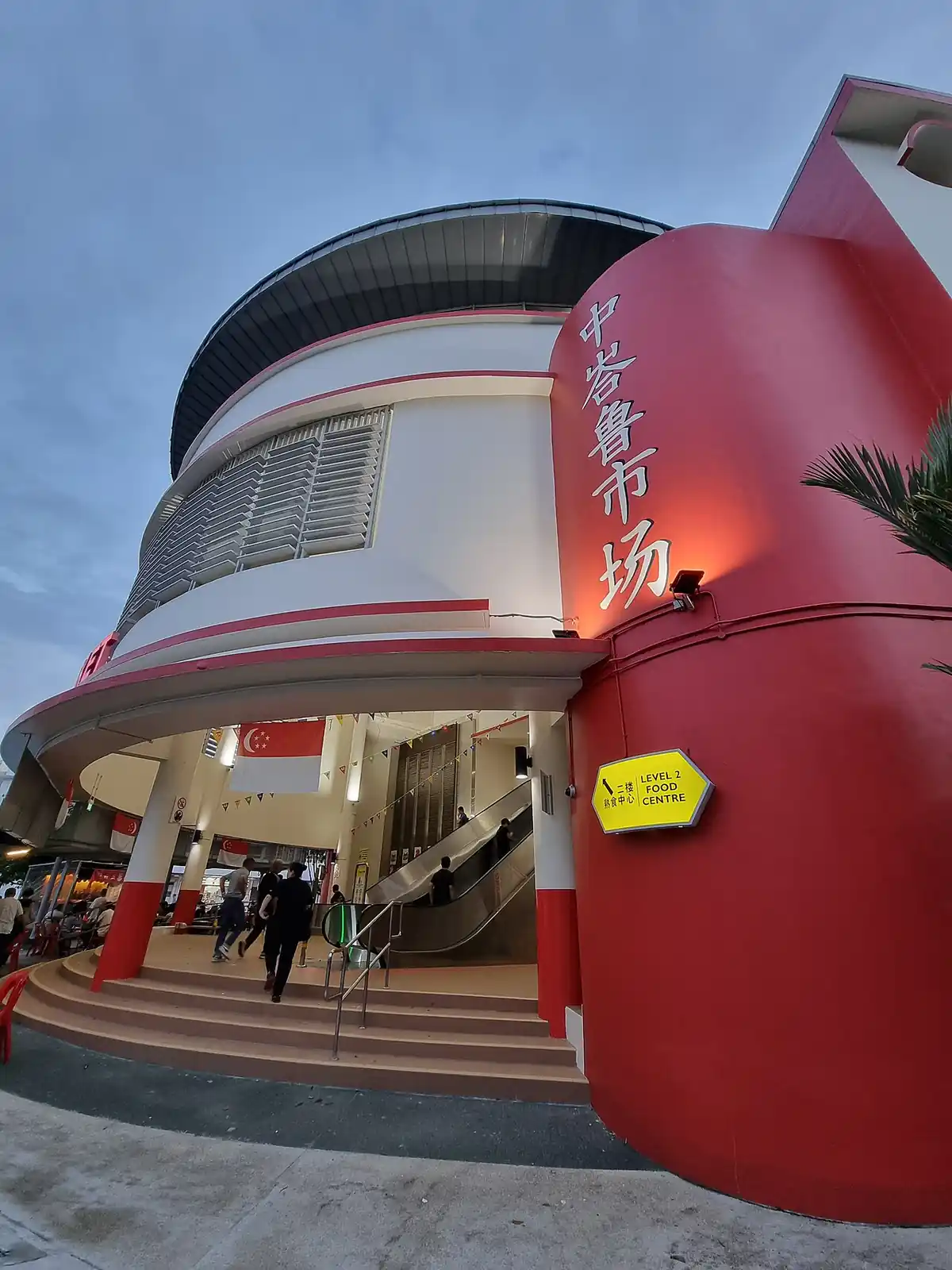
Tiong Bahru Market
Time here
Budget
Leave by
30–45 min
$5–12 for full breakfast
8:30am to reach cafes pre-queue
Stop 2 Yong Siak Street and Forty Hands
Yong Siak Street & Forty Hands
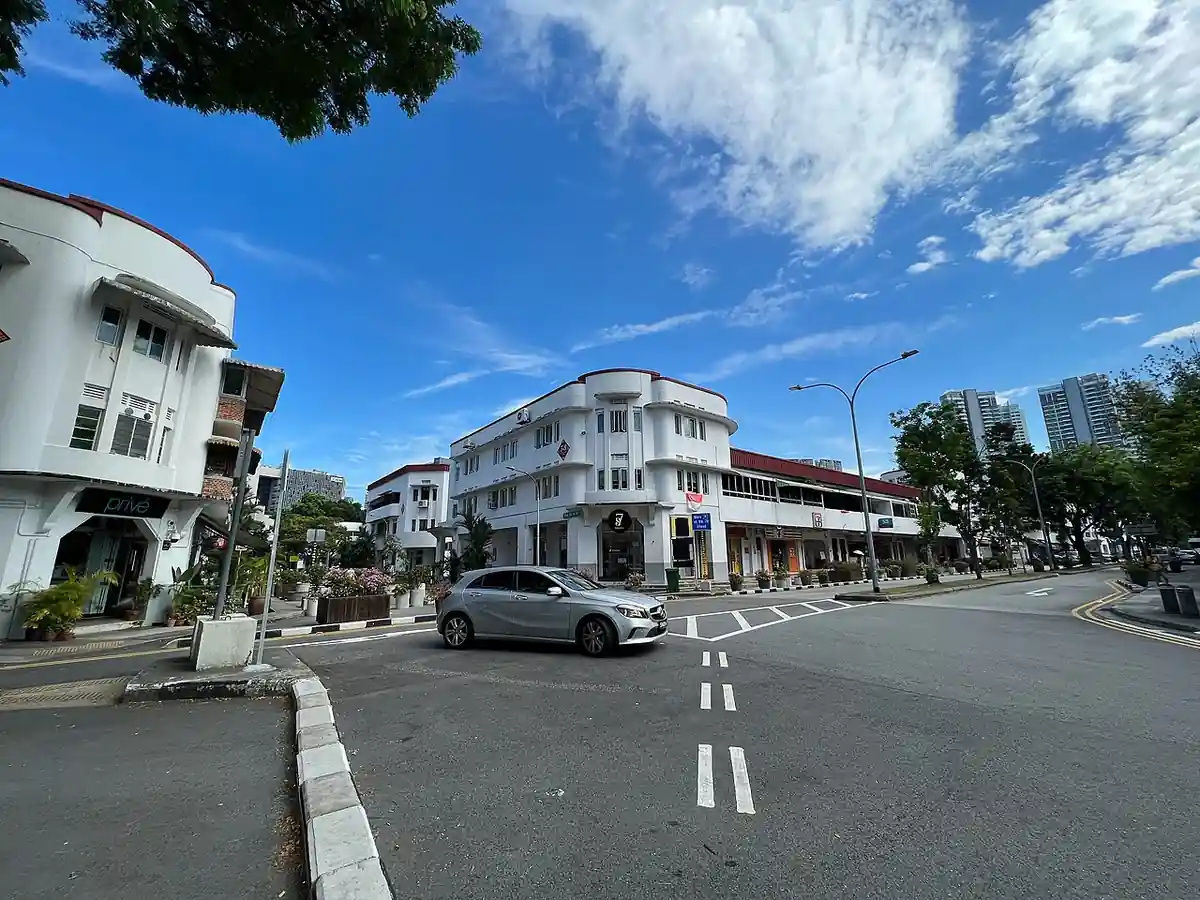
Yong Siak Street is the conservation area’s commercial and social spine the street that most visitors associate with Tiong Bahru and the one where the neighbourhood’s international food reputation is most concentrated. Forty Hands at number 78 is the street’s anchor cafe, open since 2010 and the reason the conservation area became a food destination before the bakery and the bistro arrived.
Order a flat white from Forty Hands and take a table on the five-foot way facing the street. Drink the coffee slowly. Look north along the five-foot way the receding perspective of columns, the alternating light and shadow under the colonial colonnade, the shophouse facades above. This is the conservation area view that photographs most often. It is better in person, before the visitor crowd thins the resident morning out of the street.
While you drink the coffee: look at the shophouse directly across the street. The upper floor windows some with the wooden shutters of an older interior, some with the aluminium frames of a later renovation. Someone lives behind those windows. The cafe you are sitting in, the flat above it, and the flat across the street have been in the same building fabric since 1938.
Stop 3 The Five-Foot Way Architecture

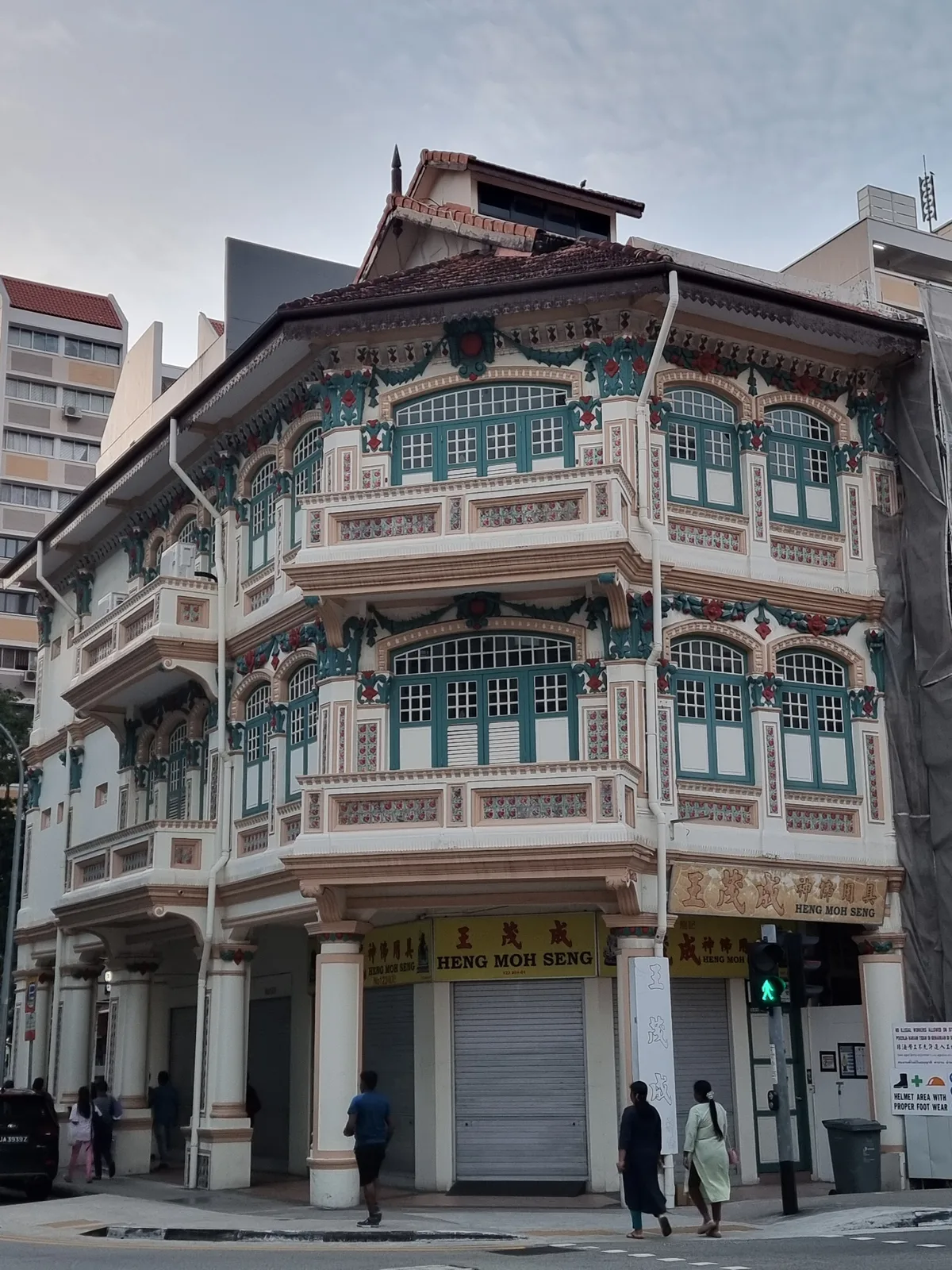
The five-foot way is the defining architectural feature of the Tiong Bahru conservation area the covered colonnade running the full length of each shophouse street frontage, mandated by colonial building regulations as a condition of permission. Walk the full length of Yong Siak Street slowly, staying in the five-foot way rather than the carriageway, and pay attention to the following details that most visitors miss:
Stop 4 Plain Vanilla and Books Actually
Plain Vanilla & Books Actually
At the southern end of Yong Siak Street, Plain Vanilla Bakery (1D) and Books Actually (9) are the two addresses that complete the conservation area’s food-and-culture circuit. Plain Vanilla for the cupcakes and banana bread if you are still eating the salted caramel is the order. Books Actually if you arrive after 10am Tuesday to Sunday Singapore’s best independent bookshop, the Math Paper Press imprint, the Singapore literature shelf at the back of the shop.
Books Actually requires time rather than a quick stop. Budget 45–60 minutes if you are a browser. The physical density of the shop shelved to the ceiling, every surface used, a careful selection that rewards attention rather than scanning makes it the specific kind of bookshop that produces unexpected finds. Buy something. The Math Paper Press poetry titles are available almost exclusively here.
Stop 5 Eng Hoon Street and Tiong Bahru Bakery
Eng Hoon Street & Tiong Bahru Bakery
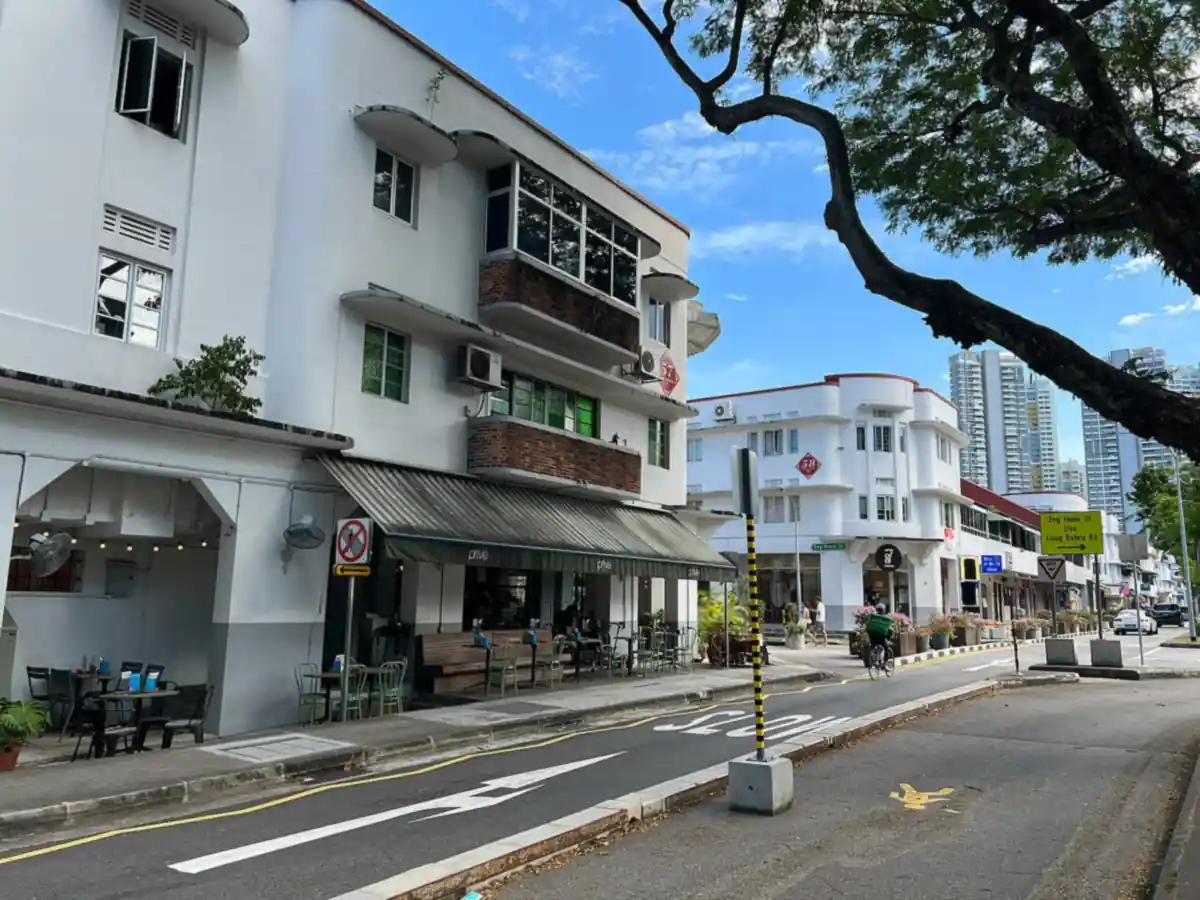
Eng Hoon Street is Yong Siak Street’s quieter parallel one block south, the same conservation area shophouses, fewer visitors, more visible residential character. Walk west along Eng Hoon Street from the Yong Siak junction to the Kim Pong Road end: you will see the same 1930s SIT shophouse fabric as Yong Siak Street but with a more domestic scale less commercial activity, more resident foot traffic, the character of a residential street on which some units happen to be cafes rather than a cafe strip that happens to have residents above it.
At the Yong Siak junction, the Tiong Bahru Bakery occupies the corner unit. Buy the kouign-amann if it is before 9:30am on a weekend this is the time-critical item of the entire walking tour. If sold out, the almond croissant is the correct substitute. Eat at the five-foot way tables facing Eng Hoon Street not inside and look at the conservation area corner as you eat. The Merci Marcel terrace shares the same five-foot way at 10am when brunch service begins.
Stop 6 Kim Pong Road and the Spiral Staircases
Kim Pong Road SIT Spiral Staircases
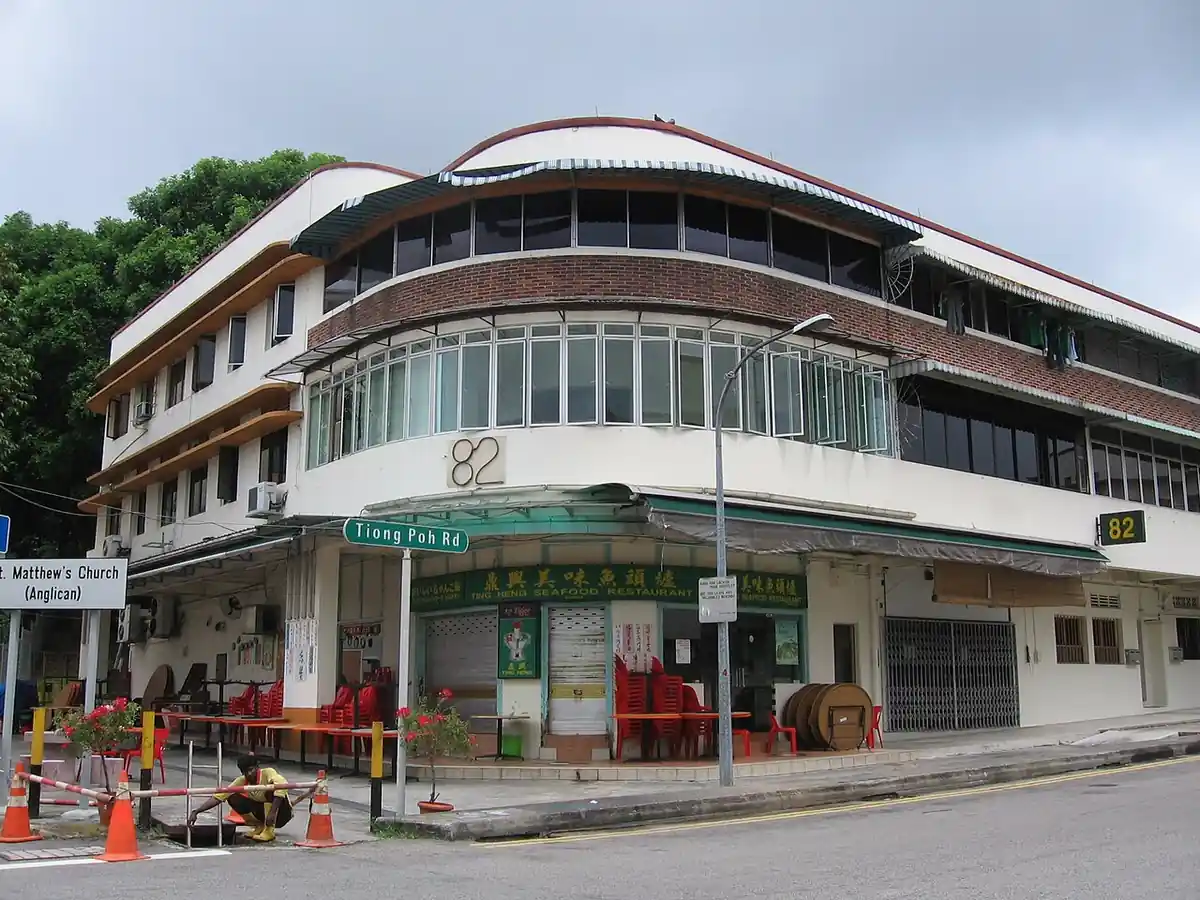
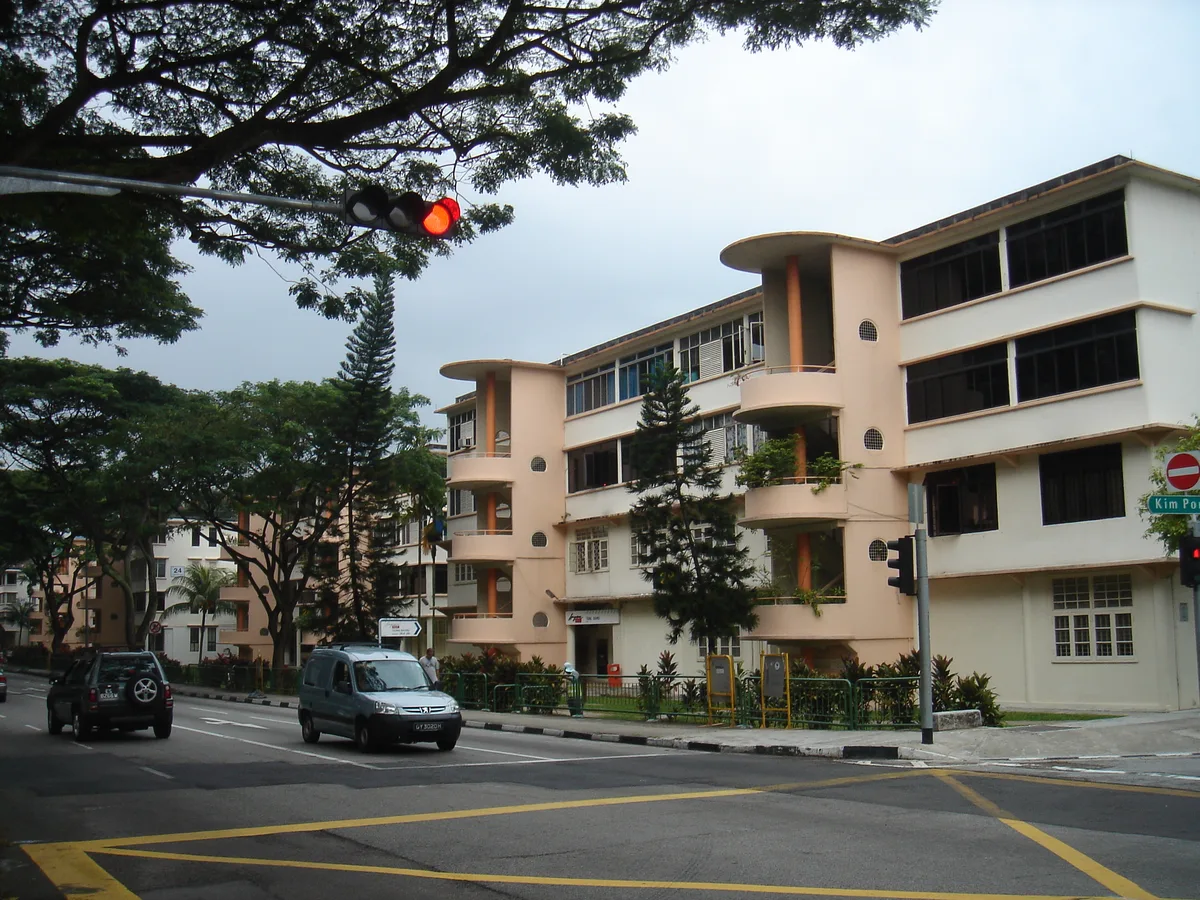
Walk north from the Eng Hoon Street junction onto Kim Pong Road. You are leaving the shophouse zone and entering the SIT residential apartment block zone the larger 4–5 storey apartment buildings rather than the 2-storey shophouses. The architectural character changes: the horizontal shophouse rhythm gives way to the vertical apartment block, and the five-foot way becomes a void deck at the ground floor level.
Each SIT residential block has a central open staircase well a circular void from ground floor to roof with the helical concrete staircase winding around the interior perimeter. Walk through the ground-floor entrance of any residential block (they are public thoroughfares residents use these staircases daily, you are not entering a private space) and look directly upward. The view the spiral of concrete stair treads against the open sky at the top is the most specifically architectural photograph available in Tiong Bahru and the one that most visitors miss entirely.
The staircase wells are best photographed before 10am when direct sunlight enters the interior of the well from above. After 11am the well falls into shade and the contrast of the photograph reduces. If photography is your purpose here: come before 10am, use the phone’s HDR mode, stand at the dead centre of the well, and look straight up.
Stop 7 Moh Guan Terrace
Moh Guan Terrace
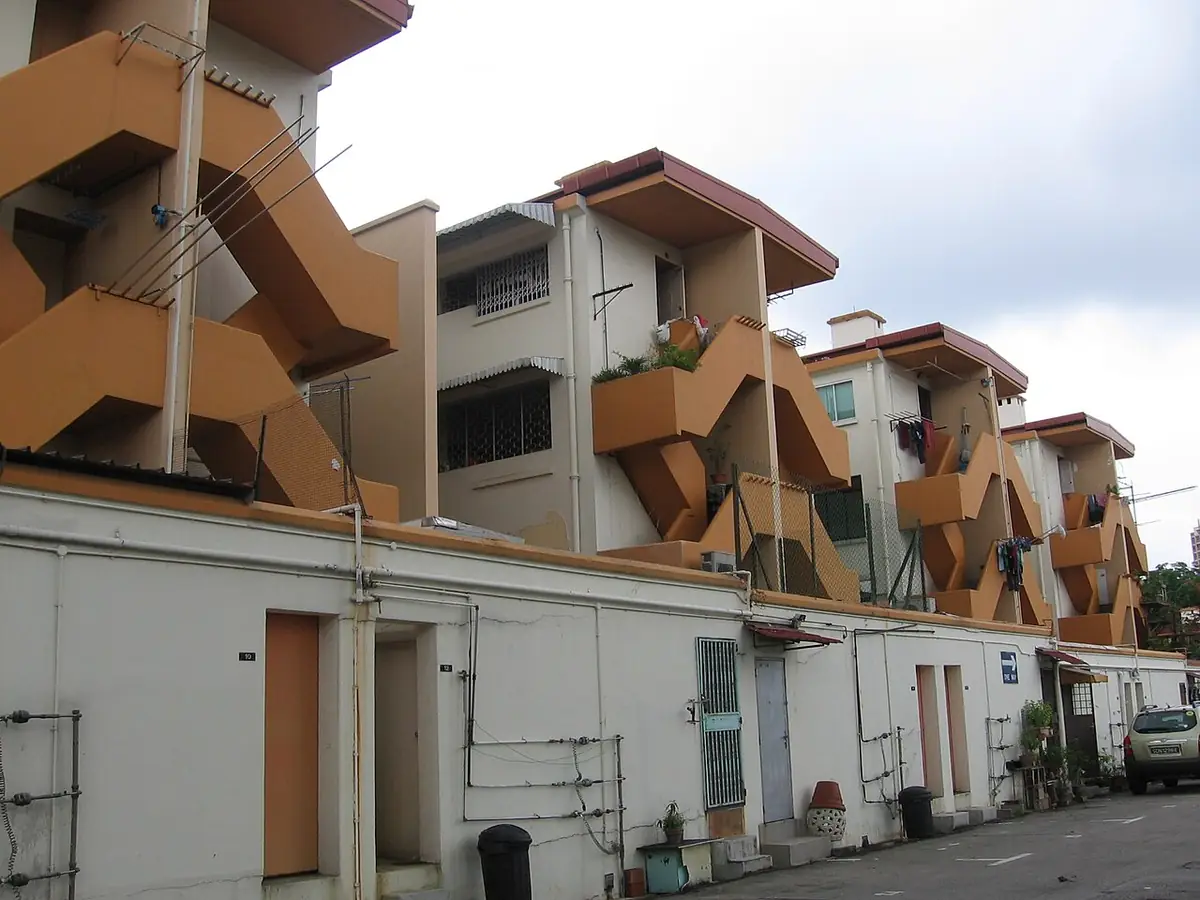
Moh Guan Terrace is the conservation area’s northernmost street quieter than Yong Siak and Eng Hoon, fewer commercial units, more visible residential life. Walk east along Moh Guan Terrace from Kim Pong Road. The shophouses here are in the same SIT architectural style as the southern streets but with a more domestic character some units still occupied by traditional businesses (provision shops, a kopitiam) rather than the cafes and lifestyle retailers that have replaced them on the more commercially active streets to the south.
The visual contrast between the conservation area shophouses on Moh Guan Terrace and the adjacent HDB towers is most visible from this street the 1930s two-storey scale against the 1970s fifteen-storey scale, separated by a footpath. This juxtaposition is the compressed urban history of Singapore public housing made visible in a single glance, and it is one of the more architecturally legible moments available on the walking tour.
Stop 8 Yip Yew Chong Heritage Murals
Yip Yew Chong Heritage Murals
Singapore artist Yip Yew Chong has painted large-format heritage murals on the exterior concrete end walls of HDB blocks throughout Singapore. The Tiong Bahru murals are among his most detailed painted on the HDB block walls adjacent to Eng Hoon Street and Moh Guan Terrace, depicting the social history of the estate from its construction through the 1960s–1980s community period.
The murals depict specific historical scenes: the kampong community before resettlement, the daily life of the wet market and provision shops in the early estate period, the itinerant hawkers who operated before formal hawker centres, the domestic life of the SIT shophouse community in the mid-20th century. The level of detail specific food items, period clothing, domestic objects, social interactions between specific types of community members rewards slow looking rather than a quick photograph and move on.
Finding the murals: walk the perimeter of the HDB blocks adjacent to Eng Hoon Street and Moh Guan Terrace and look at the end walls the large concrete surfaces at the short end of each rectangular block. The murals are 3–5 metres high and painted directly on the concrete. They are not signposted.
Stop 9 Bird Corner at Block 85
Bird Corner Block 85 Tiong Bahru Road
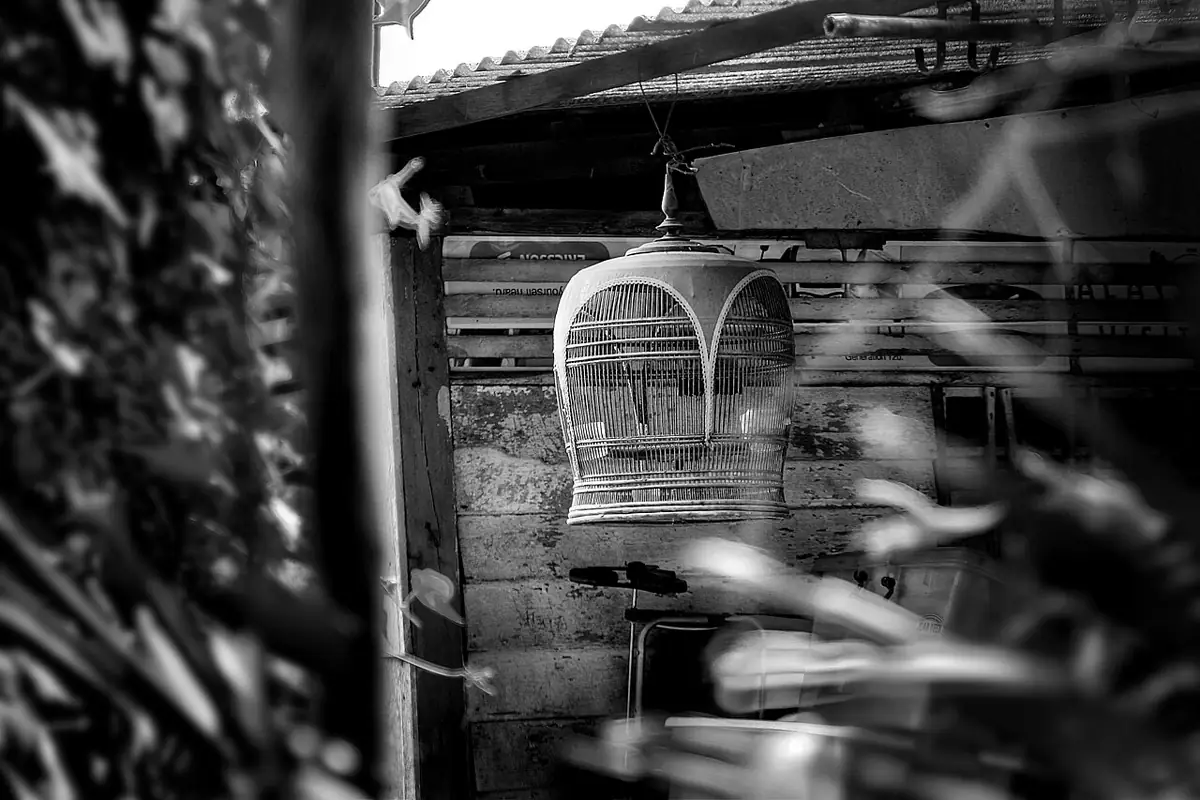
The bird singing corner at Block 85 Tiong Bahru Road is one of Singapore’s last surviving traditional bird corners a morning gathering of older male residents who bring their songbirds in cages to hang from designated hooks at the HDB void deck, allowing the birds to sing in the open air while the owners socialise. The practice was once common throughout Singapore’s HDB estates and has largely disappeared. Tiong Bahru’s Block 85 corner is one of the few active examples remaining.
The gathering happens primarily on weekend mornings from approximately 7–9am, when the largest number of bird owners bring their cages. The birds are predominantly white-rumped shamas the preferred competition singing bird in Singapore with their characteristic long tail feathers and complex, melodic song. The sound of multiple shamas singing simultaneously in the open air of the void deck is the specific acoustic experience of the bird corner and the thing photographs cannot convey.
Approach the bird corner quietly and stand at the edge of the void deck do not disturb the birds or move suddenly near the cages. Photography is acceptable from a respectful distance. The bird corner is the living heritage of Tiong Bahru that receives the least visitor attention and has the most to offer a social ritual that connects the neighbourhood’s current life to the community practices of the 1950s and 1960s estate.
Extended Tour Tiong Bahru Park
If you have time beyond the conservation area circuit, Tiong Bahru Park extends the walking tour into the estate’s green space. From Block 85, walk south and east along Tiong Bahru Road to the park entrance. The park has a water play area (useful if visiting with children), the Sit Wah Dog Run (off-leash fenced area, busy weekend mornings), and a skate park. The park’s mature trees provide genuine shade useful from 9:30am onwards when the conservation area streets begin to warm.
The park is a resident amenity rather than a visitor attraction, and its value on the walking tour is in seeing the estate’s community life in a different mode from the market and the conservation area: the morning exercise walkers, the dog owners at the run, the children in the water play. Budget 30–45 minutes for the park if including it in the circuit.
Photography Guide What to Shoot and How
Tiong Bahru is one of Singapore’s most photographed neighbourhoods and the conservation area produces a specific set of images that appear repeatedly in travel media. Understanding which photographs are available and which require more patience and attention than the standard tourist visit produces makes the walking tour more rewarding for visitors with cameras.
The Standard Images
The Less Common Images Worth Finding
Doing the Walking Tour in the Rain
Singapore’s tropical climate makes rain a realistic variable for any Tiong Bahru morning. The walking tour is partially rain-resilient because of the five-foot way the covered colonnade provides continuous shelter along Yong Siak Street, Eng Hoon Street, Kim Pong Road and Moh Guan Terrace for the full length of each conservation area street. You can walk the entire conservation area circuit in heavy rain without an umbrella, staying under the five-foot way, and remain dry for the majority of the route.
The sections that require outdoor exposure are the crossings between streets the 10–20 metre gaps between five-foot ways at junctions and the walks to the market (Seng Poh Road has partial five-foot way coverage along the HDB commercial blocks) and to the Bird Corner at Block 85 (HDB void deck provides shelter once you arrive). A compact umbrella covers the junction crossings. The overall rainy-day walking tour is more feasible in Tiong Bahru than in most Singapore outdoor destinations because the colonial five-foot way provides structural weather protection across the full conservation area circuit.
The market in rain is a specific experience worth planning for rather than around: the resident community continues its morning market routine regardless of weather, and the covered hawker centre and wet market are both fully sheltered. A rainy Tuesday morning at the market, with the covered colonnade providing unbroken shelter from the market to the conservation area cafes, is arguably the version of Tiong Bahru that most reveals the practical genius of the five-foot way as a climate response a 1930s colonial building regulation that continues to serve its original function 90 years later.
Self-Guided vs Guided Tours
The Tiong Bahru walking tour in this guide is designed for self-guided use it contains enough specific direction, architectural detail and contextual information to navigate the neighbourhood without a guide. The self-guided approach has specific advantages for this neighbourhood: you can pace yourself around the food sequence (market kueh, coffee, bakery pastry) in a way that a guided group tour cannot accommodate, and you can linger at the staircase wells or the murals for as long as the photography or observation requires.
Organised guided tours of Tiong Bahru are available through the National Heritage Board’s heritage tour programme, through private heritage tour operators in Singapore, and through the Tiong Bahru Community Centre’s occasional community heritage walk offerings. These guided tours provide access to information oral history recollections from community members, architectural details that are not publicly documented, access to sites that are not on the standard walking route that this guide cannot provide. If the neighbourhood’s history and community life are your primary interest, a guided tour from an operator with genuine NHB or academic heritage expertise adds significantly to what a self-guided walk reveals.
The NHB’s website (nhb.gov.sg) and the My Community festival programme list current heritage walk offerings for Tiong Bahru and surrounding areas. These typically run on weekends and may require advance registration. The Community Chest and Singapore Tourism Board periodically co-produce heritage walk programmes in the neighbourhood that are free or low-cost.
FAQ Tiong Bahru Walking Tour
Brandon’s Verdict
The cafes are the reason most people come. The staircases, the murals, the bird corner and the market are the reason to come back.
I have walked this circuit more times than I can count with visitors from other countries, with friends who have lived in Singapore all their lives and have never been to the bird corner, with my own children who spent twenty minutes looking up through a staircase well on Kim Pong Road before asking if they could do it again. The conservation area reveals itself incrementally. The first walk you see the cafes. The second walk you start to see the architecture. The third walk you start to understand the community. The walking tour in this guide is designed to compress that process into a single morning. But it is a compression the neighbourhood rewards more visits than a guide can manufacture.