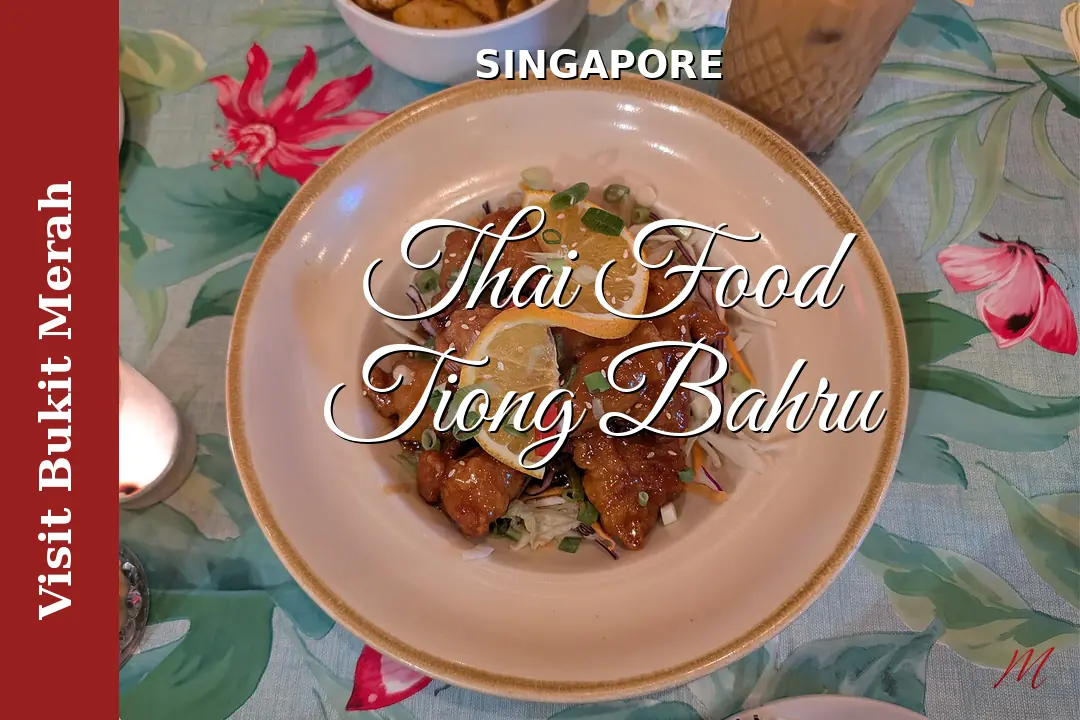
10 Best Thai Food Near Tiong Bahru | Local Guide (2026)
Singapore’s Thai food scene is excellent, concentrated, and not in Tiong Bahru. The planning area has no dedicated Thai restaurant its food identity runs French, Japanese, and Hokkien-Cantonese hawker. But the Thai restaurants worth knowing are within 15–25 minutes of the neighbourhood by MRT or Grab, and the diversity of what Singapore does with Thai food from $6 pad thai at a hawker centre to serious northern Thai restaurants charging $60 per person is worth understanding before you spend an evening chasing the wrong version. This guide covers 10 options: the Thai food delivery and hawker finds accessible from Tiong Bahru, and the specific Thai restaurants nearby that are worth a commute.
Thai Dish Glossary What to Order and Why
Thai food covers an enormous range the food of Bangkok street stalls is different from northern Chiang Mai cuisine, southern coconut-heavy curries, and the royal-kitchen tradition that influences fine-dining Thai restaurants. Singapore’s Thai food scene covers all of these registers. This glossary covers the dishes that appear most commonly at the Thai restaurants near Tiong Bahru, ordered from most to least universally available.
Thai Food Accessible from Tiong Bahru (Entries 1–3)
No dedicated Thai restaurant exists inside the Tiong Bahru planning area. What does exist: Thai-influenced hawker stalls at the market and nearby kopitiams, delivery coverage from Thai restaurants in the vicinity, and Don Don Donki’s Thai ingredient section for apartment cooking. These are the options that do not require leaving the neighbourhood with honest assessments of where they sit relative to the actual Thai restaurant options nearby.
Thai Hawker Stalls Market & Estate Kopitiams
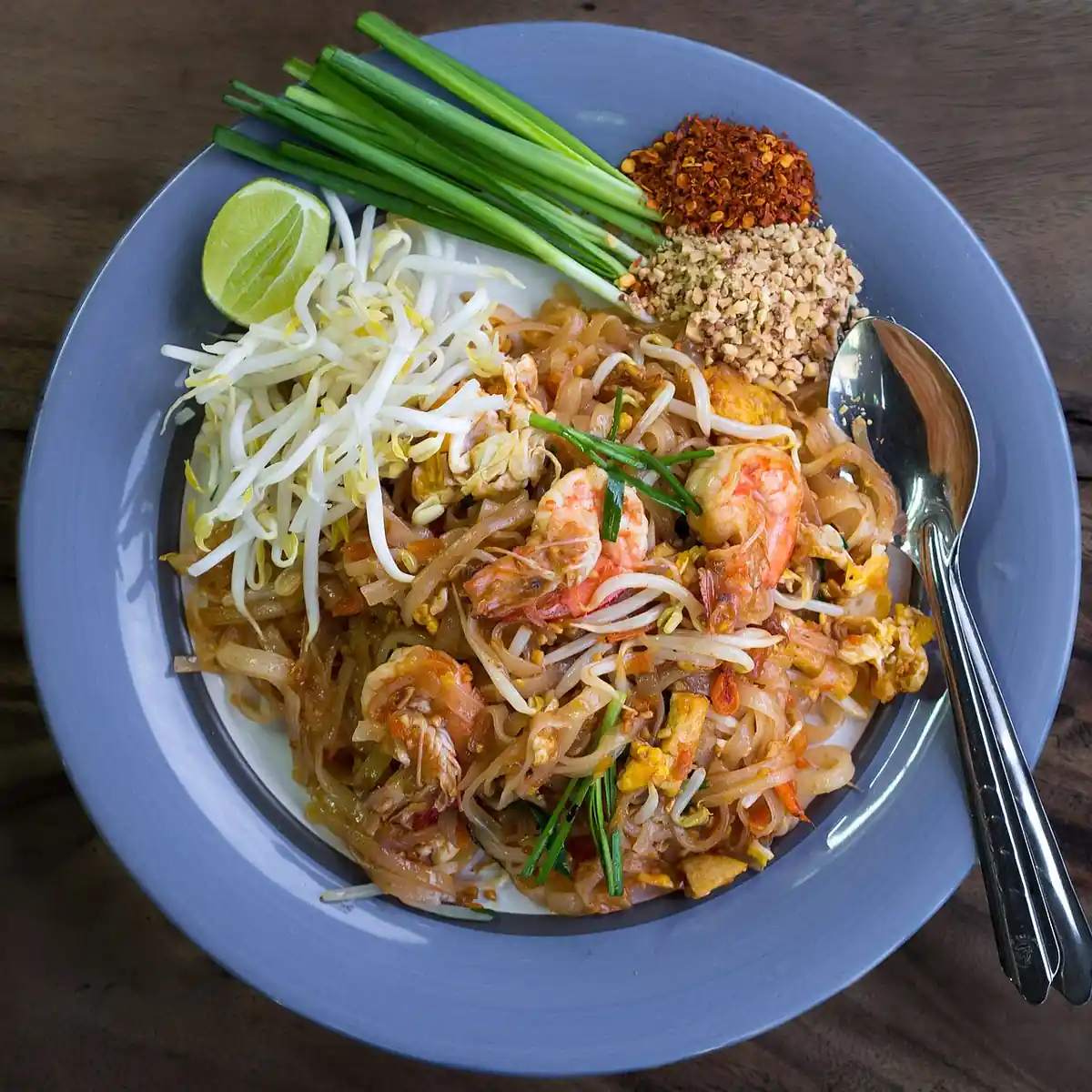
Thai hawker food in Singapore exists across the city’s hawker centres and kopitiams in a form that is domesticated for the local Singapore palate pad thai made with flat rice noodles in a slightly sweeter, less funky version than the Bangkok original, tom yum noodle soup adapted for hawker centre service with dried spice packets replacing the fresh galangal and lemongrass, and Thai-style stir-fries using the same wok technique as Chinese hawker cooking but with fish sauce and Thai basil as the seasoning base.
The Tiong Bahru Market hawker centre and the HDB estate kopitiams within the planning area occasionally carry one or two Thai-influenced stalls typically a Thai-style noodle stall (tom yum noodles or boat noodle-adjacent options) or a Thai stir-fry stall alongside the Chinese hawker staples. These are not dedicated Thai restaurants. They are hawker stall operators who cook Thai-influenced dishes alongside a broader menu. The quality is at the hawker centre standard rather than restaurant standard functional, affordable, adequate.
The honest assessment: for a $5–7 pad thai or tom yum noodle soup that does not require leaving the neighbourhood, the hawker centre Thai options serve the purpose. For Thai food worth choosing specifically rather than defaulting to, the Thai restaurant clusters near Chinatown and the Golden Mile area (Entries 4–8) are in a different quality category. Do not plan a Thai food evening around the hawker centre options; use them for a casual lunch when you are already at the market and want something that approximates the flavour.
What to Order
Tom yum noodles: the soup version translates better to hawker centre format than dry dishes the hot sour broth is more forgiving of the dried-spice adaptation · Pad thai: order with prawns rather than chicken for the closest-to-authentic result · Add fresh lime and chilli from the condiment tray at the table it compensates for whatever fresh aromatics the hawker version lacks
Thai Restaurant Delivery GrabFood & Foodpanda
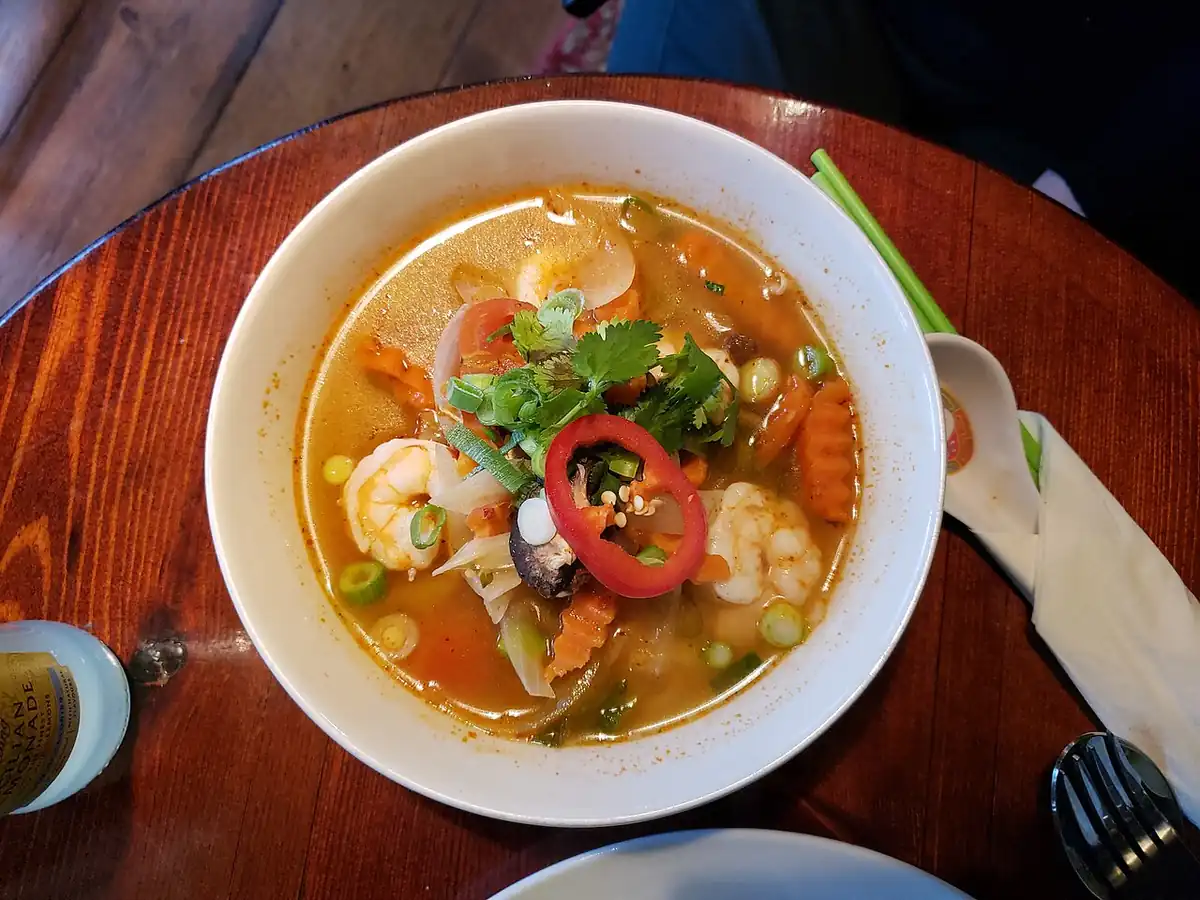
Thai restaurants in the Chinatown, Tanjong Pagar and CBD area 15 minutes by MRT from Tiong Bahru fall within the delivery radius of GrabFood and Foodpanda for addresses in the Tiong Bahru planning area. Delivery coverage means you can access restaurant-quality Thai food (green curry, pad kra pao, tom kha gai, mango sticky rice) at your hotel or serviced apartment without the commute, at a delivery premium over the dine-in price but significantly below the cost of a taxi for a group.
For hotel or serviced apartment stays in Tiong Bahru, Thai delivery is the most practical way to access restaurant-quality Thai food without disrupting the evening programme. Order green curry and pad kra pao delivered at 8pm, eat at the apartment, then walk to Merci Marcel for wine at 9pm the sequencing works better as a two-part evening than as a restaurant dinner commitment. Delivery quality degrades for dishes where texture matters (crispy Thai spring rolls become soggy, pad thai noodles over-soften) but holds well for curry-based dishes where the sauce absorbs into the rice over the delivery window rather than losing quality.
The practical steps: open GrabFood or Foodpanda, enter your Tiong Bahru address, filter by Thai cuisine, and sort by rating. The restaurants within delivery range will populate automatically the current best options vary by year and platform algorithm, so checking on arrival gives more accurate results than any specific recommendation made here. Delivery time from Chinatown-area Thai restaurants to Tiong Bahru is typically 25–40 minutes depending on traffic and demand.
Best Delivery Orders
Green curry with jasmine rice travels well, sauce absorbs into rice without degradation · Massaman curry lowest heat, rich sauce, potatoes and peanuts hold texture during delivery · Tom kha gai (coconut galangal chicken soup) broth stays hot, aromatics remain present · Pad kra pao (Thai basil stir-fry) order with extra jasmine rice · Avoid: pad thai (noodles over-soften), whole fish dishes (bones require table attention), spring rolls (lose crispness)
Don Don Donki Thai Pantry Ingredients
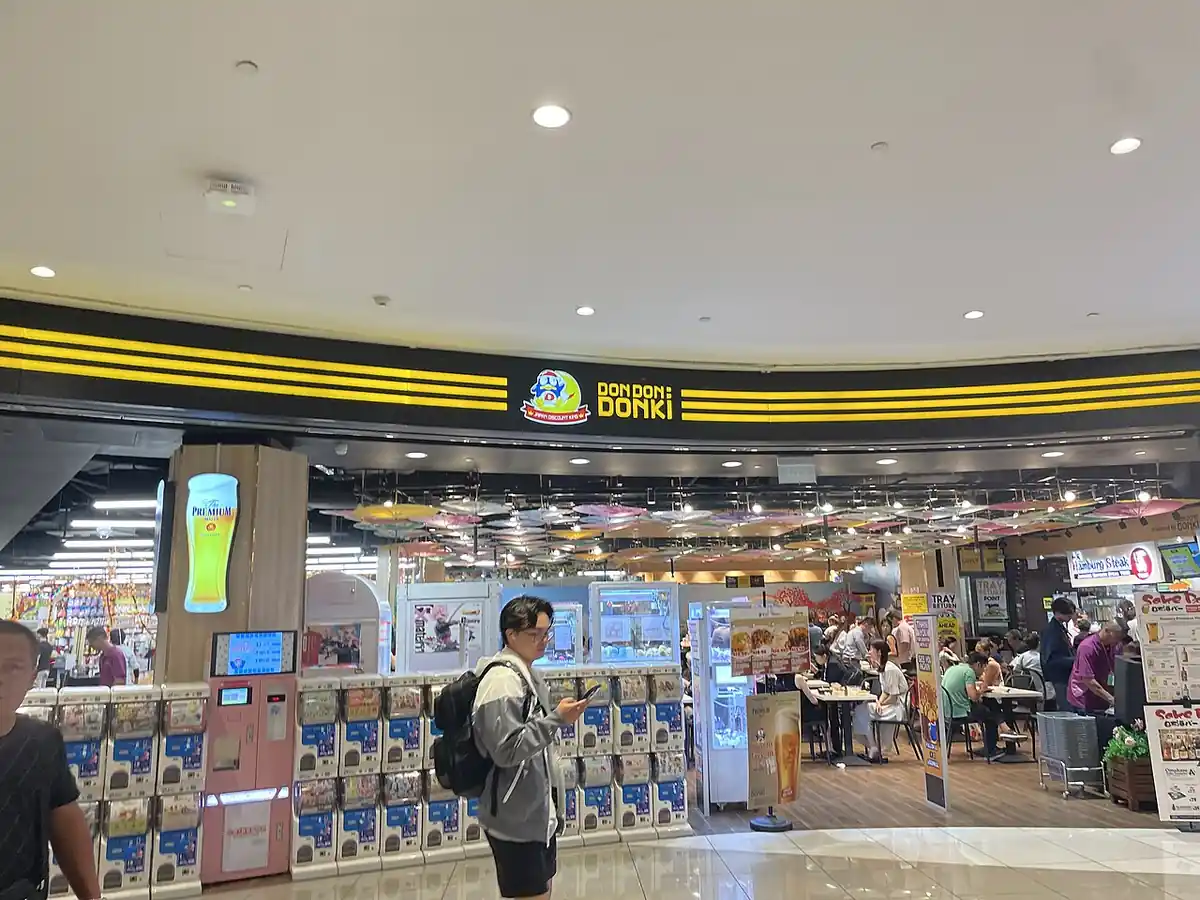
Don Don Donki at Tiong Bahru Plaza stocks the core Thai pantry ingredients that make apartment Thai cooking possible. The fish sauce selection (Tiparos, Megachef, Golden Boy brands all reliably good) is the most important Thai cooking ingredient and the one most worth buying at Donki rather than attempting to substitute. Fish sauce is to Thai cooking what soy sauce is to Chinese cooking: not an optional seasoning but a foundational flavour component. A bottle of Tiparos or Megachef fish sauce ($4–6) transforms apartment cooking from “Thai-influenced” to genuinely Thai-tasting.
Mae Ploy and Maesri brand Thai curry pastes green, red, massaman, panang, yellow are available in small tins ($2–4 each) that make a usable curry with a can of coconut milk (also available at Donki) and whatever protein and vegetables are at hand. The quality of these paste brands is consistently good for apartment-level cooking not the from-scratch fresh paste that a good Thai restaurant pounds daily, but a legitimate shortcut that produces a recognisably Thai curry rather than a vaguely seasoned coconut milk stew.
The Donki Thai pantry section is most useful for visitors staying in serviced apartments with kitchen access for a week or more buying fish sauce, two or three curry paste tins, coconut milk, and jasmine rice covers the basic infrastructure for multiple Thai cooking sessions without a specialist grocery trip. For the single ingredient most worth buying even for a short stay: fish sauce. It improves any Southeast Asian dish you cook during your time in Singapore and the small bottle takes minimal luggage space.
Buy This
Fish sauce: Tiparos or Megachef brand ($4–6) the essential Thai ingredient · Curry paste: Mae Ploy green or massaman tin ($2–4) · Coconut milk: Aroy-D or Chaokoh brand ($2–3 per can) · Jasmine rice if cooking multiple meals · Lime leaves (kaffir lime, dried or fresh if available) for finishing curries
Thai Restaurants Chinatown & Boat Quay
The Chinatown and Boat Quay area reachable from Tiong Bahru MRT (EW17) in 15 minutes via Outram Park (EW16) to Chinatown (NE4/DT19) has the closest concentration of Thai restaurants to Tiong Bahru. Two distinct dining registers exist in this area: the casual street-food-style Thai restaurants that cluster around the Chinatown food streets, and the riverside casual Thai operations on the Singapore River at Boat Quay.
Chinatown Thai Restaurant Cluster
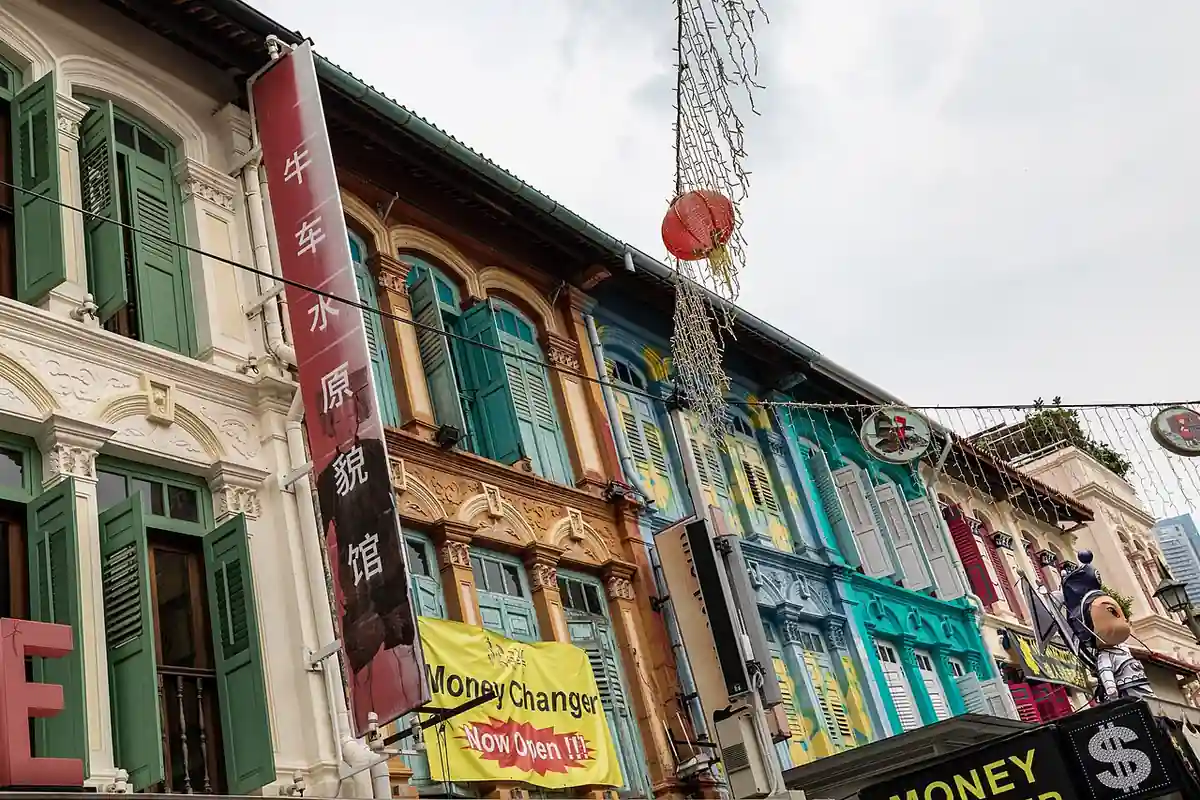
The Chinatown area around Smith Street, New Bridge Road and the surrounding blocks has a cluster of Thai restaurants that range from casual lunch spots to evening dinner venues. The proximity to the large Thai expatriate and Thai Buddhist community in Singapore (centred partly around the Thai Embassy area in the Tanglin district, but with restaurant spillover across the central area) means the Chinatown Thai restaurants include some genuinely Thai-operated kitchens cooking for a Thai customer base rather than adapting for the Singapore-tourist palette.
The Thai restaurants in the Chinatown cluster vary significantly in quality and authenticity. The benchmark test at any Thai restaurant: order the som tam (green papaya salad) and pad kra pao (Thai basil stir-fry). Both dishes are simple in format but difficult to fake the som tam should be pounded to order in a mortar rather than pre-shredded, and the pad kra pao should smell aggressively of fresh Thai holy basil (horapa or kra pao) rather than the Italian sweet basil that many Singapore kitchens substitute. If both benchmark dishes are correctly executed, the rest of the menu is likely to be trustworthy.
Specific venue recommendations in the Chinatown Thai cluster require current research the best options change more frequently than in the Japanese or Korean restaurant zones because the Thai restaurant scene in Singapore has a higher turnover. Singapore food media (HungryGoWhere, Burpple, The Smart Local) maintain current Thai restaurant rankings updated annually. From Tiong Bahru: EW17 to EW16 Outram Park, change to the North-East Line or Downtown Line to Chinatown (NE4 or DT19), then walk. Total: 15 minutes.
The Benchmark Order at Any Thai Restaurant
Som tam (green papaya salad) should be pounded to order in a mortar, not pre-mixed · Pad kra pao (Thai basil stir-fry with egg) should smell strongly of holy basil, not sweet Italian basil · Tom yum goong (prawn soup) should use fresh lemongrass and galangal, not dried · If all three are correct, the kitchen is doing the right things
Boat Quay Riverside Thai Dining
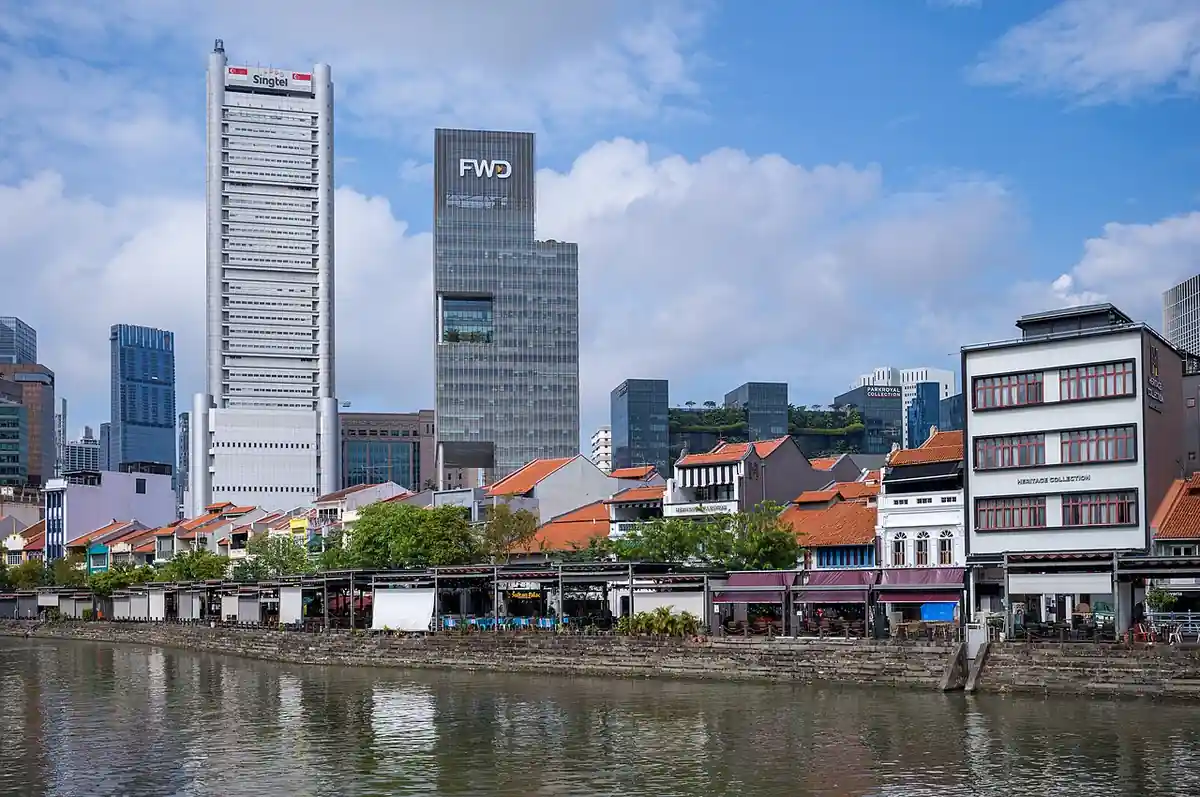
Boat Quay along the Singapore River a stretch of restored shophouses facing the water with outdoor riverside tables has several Thai restaurants that use the setting as their primary selling point alongside the food. Eating at a riverside table on the Singapore River at night, with the CBD skyline across the water and the river traffic below, is one of Singapore’s most visually specific dining experiences, and the Thai restaurants that operate in this format provide a combination of setting and food quality that justifies the slightly higher price point relative to the Chinatown cluster.
The Thai restaurants at Boat Quay are primarily casual rather than fine-dining the outdoor riverside setting suits a relaxed order of green curry, whole sea bass with Thai herbs, and a round of Thai iced tea rather than a structured tasting menu. The food quality at the better Boat Quay Thai restaurants is solid rather than exceptional the setting is the reason to go, and the food at its best is a good version of Thai restaurant standards (tom yum, green curry, pad thai, mango sticky rice) rather than a distinctive Thai culinary destination. Go for the river setting with competent Thai food; do not go expecting the most authentic Thai cooking in Singapore.
From Tiong Bahru: either take the MRT to Clarke Quay (NE5, via Outram Park) and walk along the riverside to Boat Quay (10 minutes), or Grab directly ($12–16, 12 minutes). The riverside walk from Clarke Quay to Boat Quay is pleasant in the evening the Singapore River with its boat traffic and the lit skyline backdrop is worth the extra ten minutes on foot rather than arriving by taxi directly.
Order This at Boat Quay Thai
Green curry with jasmine rice the most forgiving dish in terms of kitchen-to-setting ratio · Thai-style whole steamed fish with lime, garlic and chilli if available the seafood format suits the riverside setting · Tom yum goong to start · Mango sticky rice to finish the dessert takes time to prepare, order it with the mains · Thai iced tea (cha yen) or young coconut to drink throughout
Best Thai Restaurants in Singapore Near Tiong Bahru
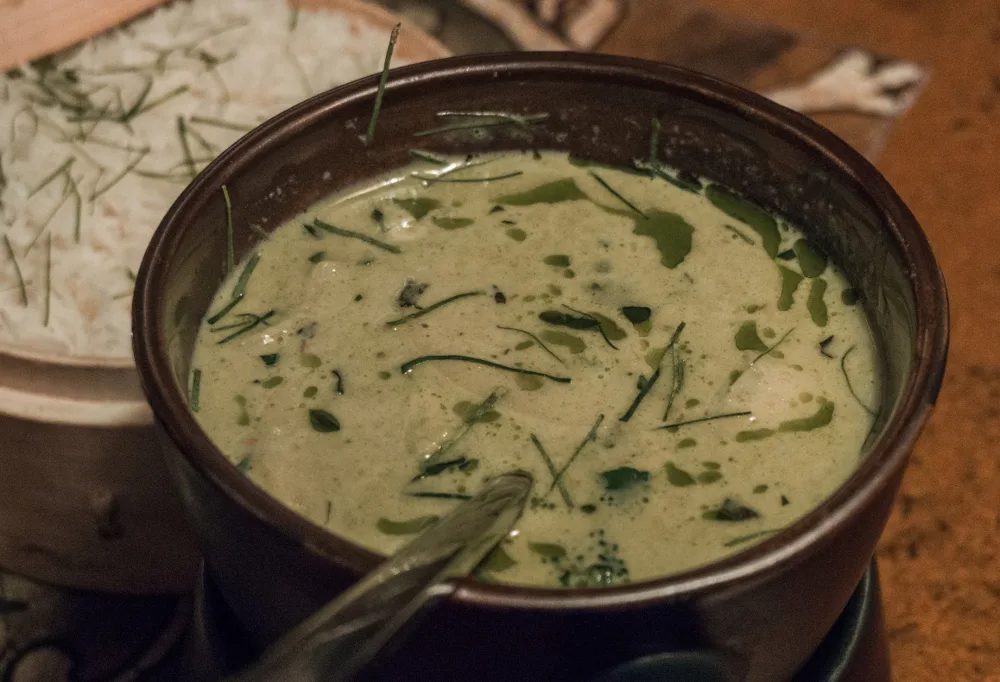
Four Thai restaurant options that represent different tiers and styles of Singapore’s Thai food scene from the best-value authentic Thai in the city to fine-dining Thai, a riverside casual operation, and the most complete Thai grocery source for visitors who want to cook or source specific ingredients. All are within 25 minutes of Tiong Bahru.
Nakhon Kitchen
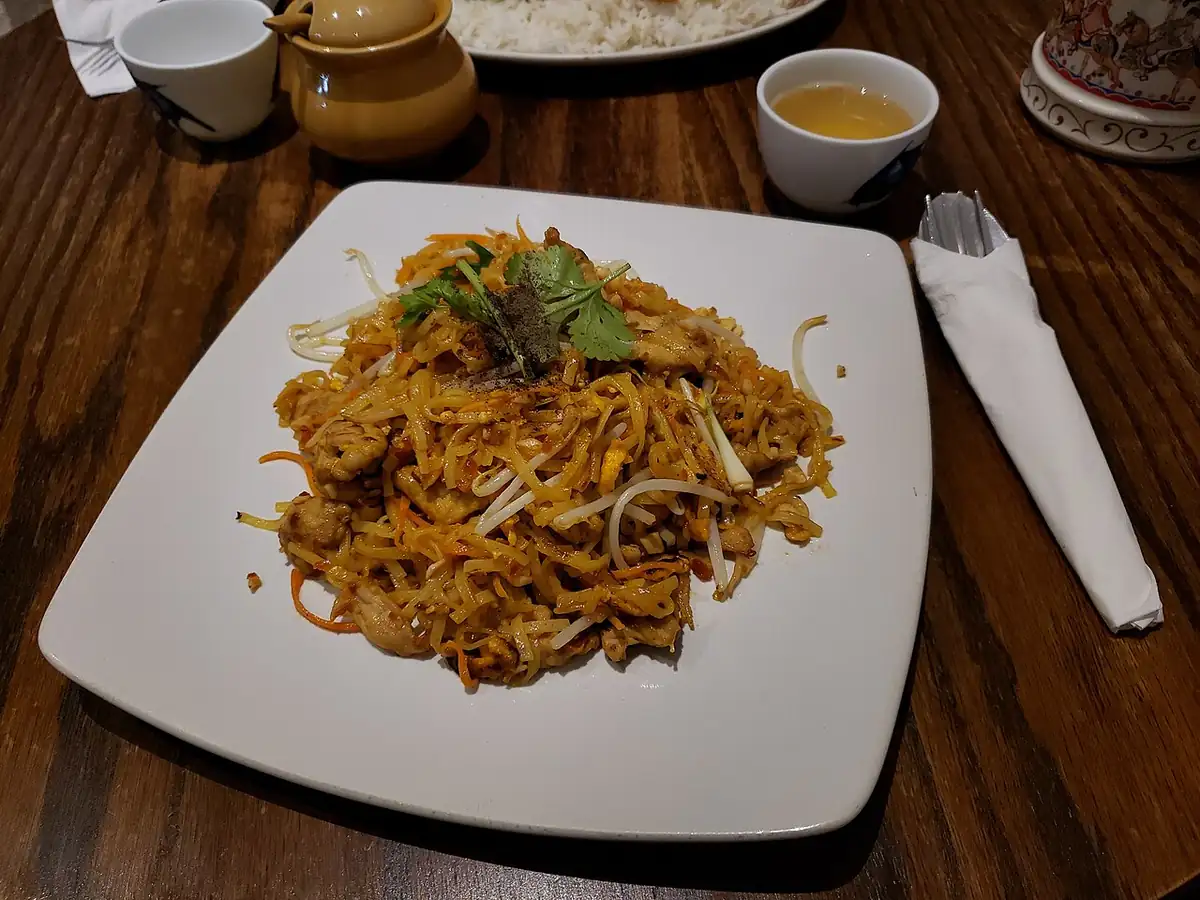
Nakhon Kitchen has built a reputation as Singapore’s most reliably authentic casual Thai restaurant across its multiple outlets. The kitchen cooks for a predominantly Thai customer base a reliable indicator of authenticity in Singapore’s Thai food scene and the menu covers both the Bangkok street food standards (pad thai, pad kra pao, tom yum) and the Isan northeastern Thai dishes (som tam, larb, boat noodles, spicy duck salad) that most Singapore Thai restaurants underrepresent. The Isan section of the Nakhon menu is what distinguishes it from the general casual Thai restaurant: northeastern Thai food is more intensely funky, sourer and more chilli-forward than central Bangkok Thai, and it is harder to find in Singapore at this quality level.
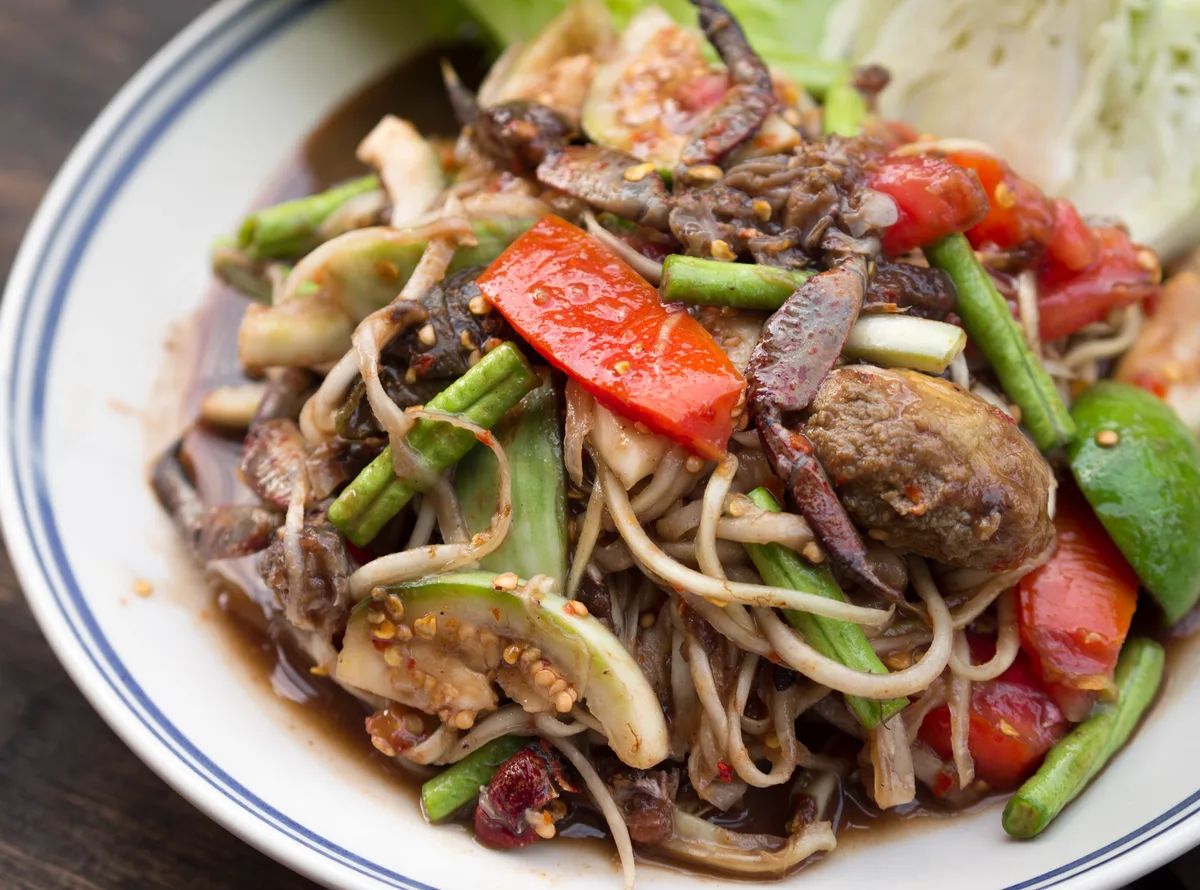
The som tam at Nakhon Kitchen is the benchmark item made with a pestle and mortar to order, the green papaya properly shredded (not machine-cut), the dressing balanced between fish sauce salinity, lime acidity, palm sugar sweetness and the heat of fresh bird’s eye chilli. The fermented crab version (som tam pla ra) is available at some outlets for visitors who want the most intensely funky, authentic Isan version. The larb moo (minced pork salad) with toasted rice powder, fish sauce and a quantity of fresh herbs is the other essential Isan order.
The price point $25–40 per person for a shared table of 4–6 Thai dishes with jasmine rice makes Nakhon Kitchen the most accessible quality Thai restaurant near Tiong Bahru for groups. The ordering format is the standard shared table Thai eating: multiple dishes for the table eaten simultaneously with rice rather than sequenced courses. Order 1–1.5 dishes per person across a range of flavour profiles one soup, one salad, one curry, one stir-fry, and jasmine rice. Do not over-order; Thai food is eaten slowly and the dishes should be warm throughout the meal.
Order This at Nakhon Kitchen
Som tam (green papaya salad, pounded to order) the benchmark item · Pad kra pao moo (Thai basil pork stir-fry with fried egg) · Tom yum goong (prawn soup, clear version nam sai) · Larb moo (minced pork salad with toasted rice powder) · Mango sticky rice to finish · Jasmine rice for the table throughout · Total for 4: $100–140 before drinks
The Isan Benchmark
The best way to evaluate any Thai restaurant in Singapore: order the som tam and ask for the real chilli level (not the Singapore-adapted mild version). A kitchen that makes proper som tam pounded in a mortar, balanced in the four Thai flavour dimensions of salty, sour, sweet and spicy is a kitchen that understands Thai food. Nakhon Kitchen’s som tam meets this standard; most casual Thai restaurants in Singapore do not.
Saawaan & the Fine-Dining Thai Scene
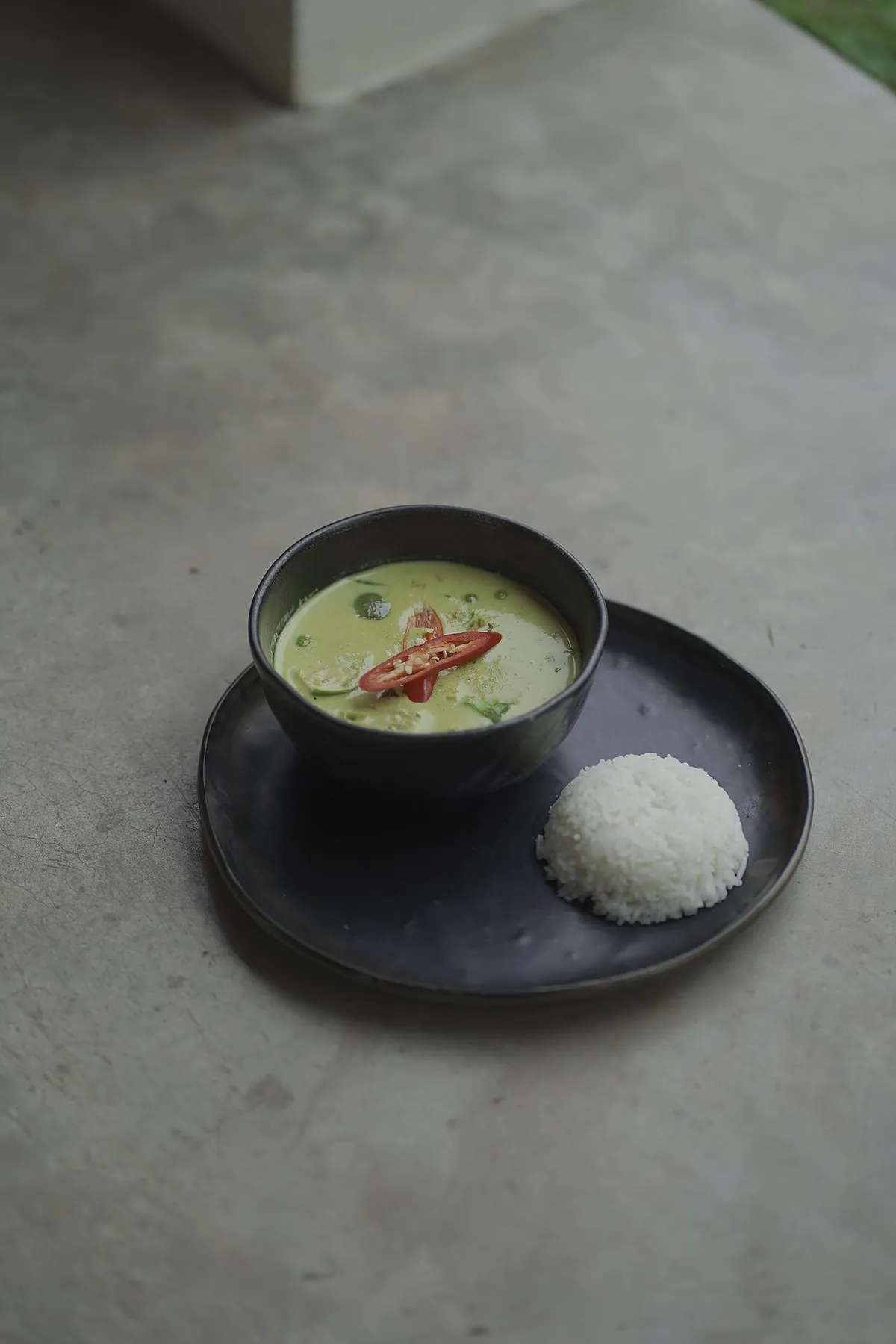
Singapore has developed a serious fine-dining Thai restaurant scene in the last five years venues applying French fine-dining technique and presentation discipline to Thai ingredients and flavour frameworks. The most prominent names have been Saawaan (a Bangkok import, Michelin-starred in Thailand) and Aaharn, which represents the royal Thai cuisine tradition in a tasting menu format. Both operate in the $100–180 per person range for a full tasting menu and require advance booking.
The fine-dining Thai proposition in Singapore is distinct from what is available at good casual Thai restaurants: the tasting menu format allows the kitchen to demonstrate the range and precision of Thai cooking across 8–12 courses, including preparations that are rarely seen at casual restaurants nam prik (Thai chilli relishes in multiple regional styles), fermented fish preparations from specific regions, royal Thai desserts that require significant preparation time, and wine or cocktail pairings calibrated to the Thai flavour profile rather than the standard European wine service. For visitors who are genuinely interested in what Thai cooking can do at its most sophisticated, the fine-dining Thai venues in Singapore offer access to a level of the cuisine that Bangkok’s own tasting menu scene has developed only recently.
From Tiong Bahru, the fine-dining Thai venues are 20–25 minutes by Grab ($18–25) and require booking 2–4 weeks ahead for weekend dinner seatings. Search current Singapore fine-dining Thai options before visiting the scene is active and new venues open regularly. What remains consistent: this tier of Thai dining is worth the premium specifically if you want to understand Thai food beyond the pad thai and green curry familiar format. If the goal is a good casual Thai dinner, Nakhon Kitchen (entry #6) is better value.
When to Book Fine-Dining Thai
Special occasions: anniversary, birthday, first night in Singapore · When you specifically want to understand Thai fine-dining rather than casual Thai · Tasting menu format only not suitable for visitors who want to order specific dishes · Book 2–4 weeks ahead for weekend dinner · Budget $150–200pp all-in with the pairing
Research Before Visiting
Singapore’s fine-dining Thai landscape changes with openings and closings. Saawaan and Aaharn are the reference names as of 2025 verify that the specific venue you intend to visit is still operating and accepting bookings before planning your trip around it. Singapore food awards (Michelin Guide Singapore, Asia’s 50 Best) are updated annually and give the most current picture of which fine-dining Thai venues are performing at the top level.
Mango Tree Thai Riverside Restaurant
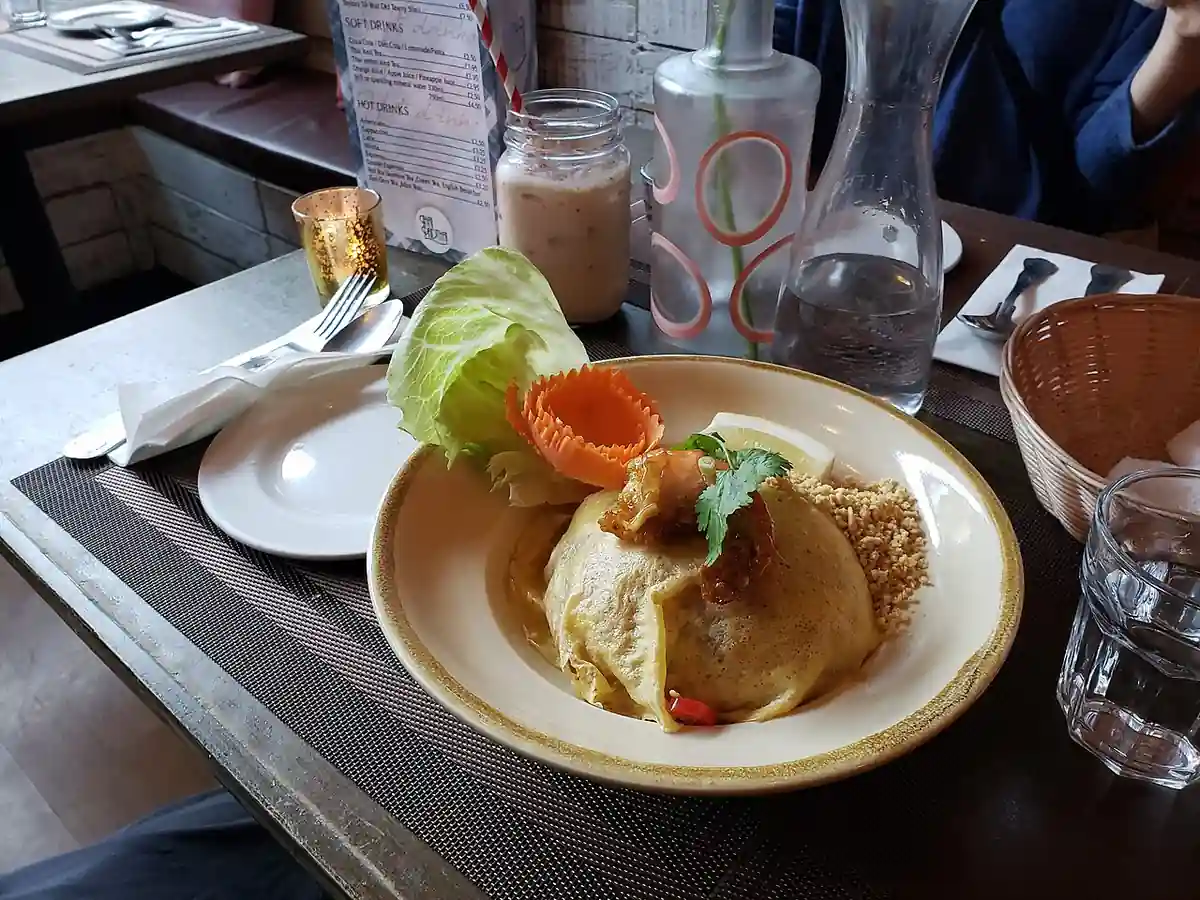
Mango Tree is a Thai restaurant in the Singapore river-and-waterfront dining cluster operating in the Fullerton area with river or marina views depending on the specific seating. The food is competent casual Thai at a price point above the Chinatown cluster but below fine-dining: green curry, tom yum, pad thai, Thai seafood preparations, and the mango sticky rice dessert that most visitors to the restaurant specifically intend to order when booking. The setting the Singapore River or the Marina Bay waterfront depending on the specific Mango Tree outlet provides the visual backdrop that elevates the meal beyond the food quality alone.
Mango Tree occupies a distinct position in the near-Tiong Bahru Thai restaurant landscape: it is the correct option when the group wants Thai food in a scenic, comfortable, air-conditioned setting with easy online booking and consistent quality rather than either the authenticity-focused Nakhon Kitchen experience or the serious investment of a fine-dining tasting menu. It is a restaurant that resolves the “where should we go for Thai food in Singapore” question with a dependable, bookable, scenically pleasant answer. The food is good enough to justify the visit; the setting is the specific reason to choose it over the alternatives at the same price tier.
Order This
Green curry with jasmine rice the most consistently executed dish across Mango Tree’s service history · Tom yum goong to start · Thai-style steamed whole fish if appetite and budget allow the seafood preparation suits the waterfront setting · Mango sticky rice: order at the same time as mains it takes 15–20 minutes to prepare and should arrive as the main courses finish · Book a window or terrace table specifically
Golden Mile Complex Singapore’s Thai Town
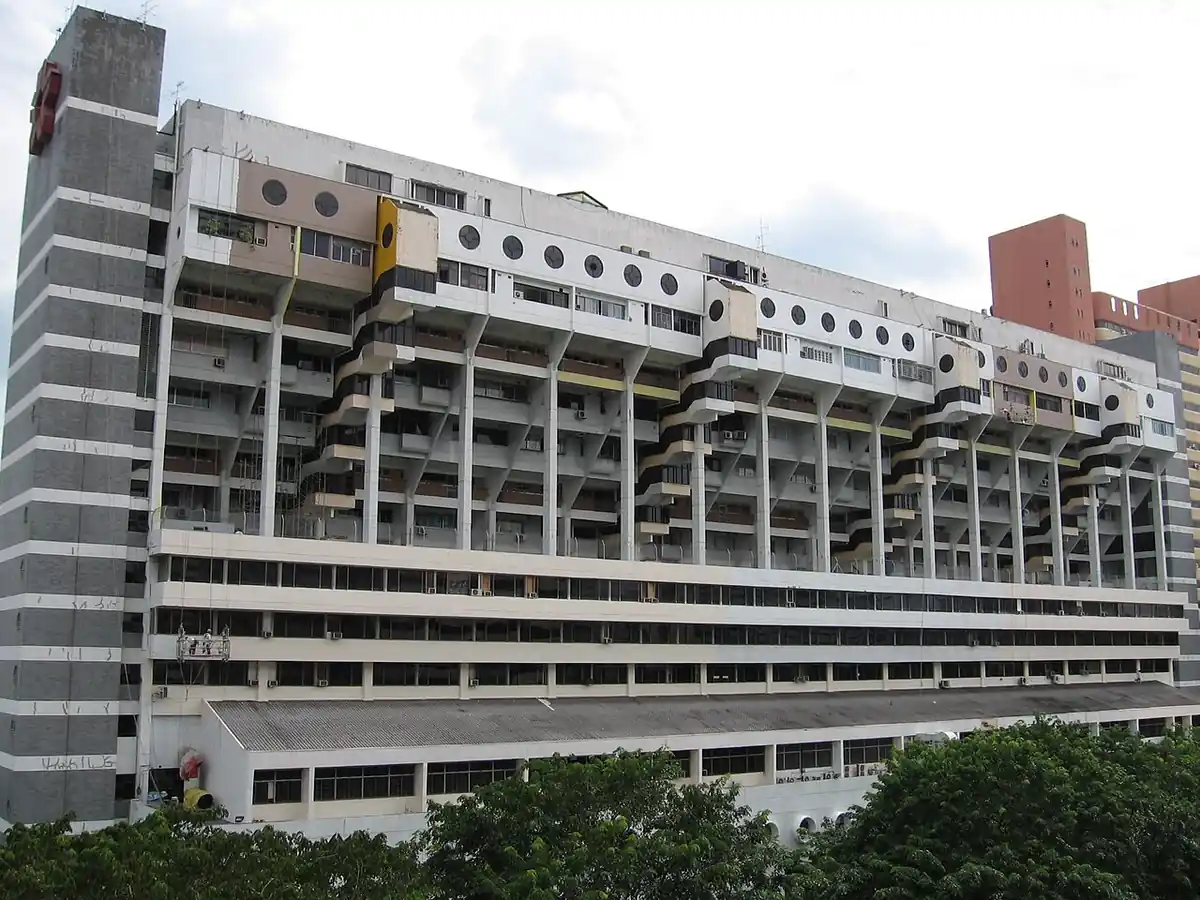
Golden Mile Complex on Beach Road is Singapore’s informal Thai town a mid-century commercial building that has been the centre of Singapore’s Thai community for decades, housing Thai supermarkets, Thai restaurants, Thai travel agencies, Thai currency exchange, Thai herbal shops and a Thai-language newspaper stand. It is the place where the Thai bus departures to Bangkok depart, where Thai workers in Singapore socialise on weekends, and where the most authentic and least tourist-facing Thai food in Singapore can be found at any hour of the day.
The food options at Golden Mile Complex cover the full range of Thai street food in Singapore’s most genuine form: Thai boat noodles in the basement food court (small bowls of dark, complex pork-blood-enriched broth with rice noodles at $2–3 per bowl order 5–6), Thai mango sticky rice from the dessert stalls (the best in Singapore, made with proper Thai sticky rice and ripe Okrong mango when in season), Thai grilled meats, som tam, and laap from the Thai-operated street food stalls throughout the building. The supermarket carries every Thai ingredient, brand and snack available in Bangkok fish sauce varieties from specific Thai provinces, dried shrimp in multiple grades, fermented shrimp paste (kapi), freshly made Thai curry pastes, Thai fruit, and the full range of Thai instant noodle flavours unavailable at Donki.
Golden Mile Complex is currently (2025) in the process of conservation and redevelopment verify its operating status before making a specific trip. Some tenants have relocated; the Thai character of the building has been partially maintained through conservation efforts but the food stall and supermarket situation may have changed since 2024. Check Singapore food media for the current operating status before visiting.
Do This at Golden Mile
Boat noodles from the basement stalls: order 5–6 small bowls, try different protein options (pork, beef) · Mango sticky rice from the dessert stalls: only in season (April–July for the best Thai mangoes) ask what mango variety they are using · Thai supermarket: buy kapi (shrimp paste), gochugaru-grade Thai dried chilli for cooking, Thai fish sauce brands unavailable elsewhere · Budget 2 hours for a proper Golden Mile visit
Check Current Status Before Visiting
Golden Mile Complex is undergoing conservation and some tenants have relocated since 2023. The Thai food stalls and supermarkets may be operating at reduced capacity or from temporary locations. Search “Golden Mile Complex 2025 Thai food” before visiting to get the current operating picture. The destination is worth verifying rather than assuming it operates as it did pre-2023.
Mango Sticky Rice & Thai Desserts
Thai desserts occupy a category that Singapore handles better than almost any other city outside Thailand itself, due to the long-established Thai community and the availability of the specific ingredients fresh Thai mangoes, pandan leaves, coconut milk, sticky rice that the desserts require. One entry covers the mango sticky rice landscape specifically because it is the Thai dessert that visitors most consistently ask about.
Mango Sticky Rice Where to Find It
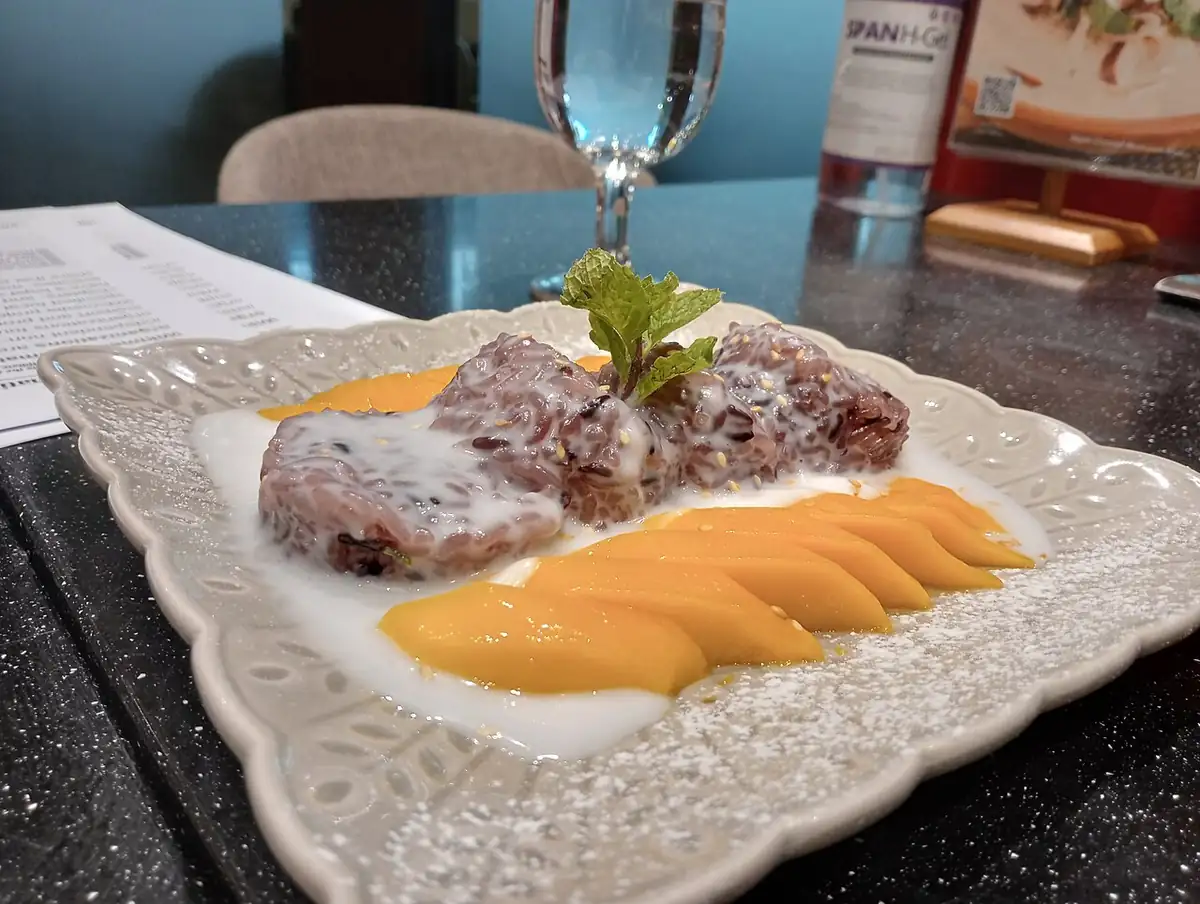
Mango sticky rice (khao niao mamuang) is the dessert that defines Thai sweet food internationally, and Singapore’s version has the advantage of access to genuine Thai mango varieties the Okrong (elongated, intensely fragrant, deeply yellow) and Nam Dok Mai (smaller, rounder, fibre-free, the highest-quality variety) imported from Thailand rather than substituted with the Carabao mangoes common in the Philippines or the Alphonso mangoes used in Indian desserts. The Thai mango varieties have a distinct floral, slightly resinous character that other mango varieties do not replicate. Mango sticky rice made with the wrong mango is structurally the same dish and completely different in flavour.
The mango sticky rice season follows Thailand’s main mango harvest: April through July is peak season, when fresh Thai mangoes are at their ripest and most abundant. Outside this window, the dessert is still available at Singapore Thai restaurants using stored or imported fruit, but the quality difference is significant the best mango sticky rice in Singapore happens specifically in the April–July window. The sticky rice (glutinous rice cooked with coconut milk and a pinch of salt) should be warm when served not hot, not room temperature and the coconut cream poured over should be salted, providing the critical sweet-salty balance that makes the dessert more than rice and mango together.
Where to find it near Tiong Bahru: Golden Mile Complex Thai dessert stalls are the most reliably authentic source (when operating see entry #9 caveat). Nakhon Kitchen (entry #6) serves mango sticky rice as a dessert when seasonal mango is available. Most Thai restaurants in Singapore carry it on the menu throughout the year, with quality varying by whether seasonal Thai mango is in use. Ask specifically: “Is this Thai mango?” and “Is the sticky rice made fresh today?” A kitchen that answers both questions correctly is a kitchen worth trusting for the dish.
Ordering Mango Sticky Rice Correctly
Ask: “Is this Thai mango (Okrong or Nam Dok Mai)?” if they say yes and specify the variety, the kitchen takes it seriously · Ask: “Is the sticky rice fresh today?” sticky rice made that morning is meaningfully better than yesterday’s batch reheated · The salted coconut cream should be poured tableside if the restaurant is serious about the dish · Best time to visit: April–July for peak Thai mango season · Budget: $8–15 at casual Thai restaurants · $5–8 at Golden Mile stalls when operating
Full Thai Food Summary Tiong Bahru Area 2026
Tips for Thai Food from Tiong Bahru
Frequently Asked Questions
Brandon’s Verdict
Tiong Bahru has no Thai restaurant. Nakhon Kitchen is 20 minutes by Grab and worth every minute. Order the som tam first. If it arrives pounded in a mortar rather than mixed in a bowl, you are in the right place.
The Thai food question from Tiong Bahru is one of the clearest cases in this guide where the honest answer is “leave the neighbourhood.” There is nothing inside the planning area that represents Thai food adequately the hawker stalls serve a domesticated version, the delivery option is practical but compromised by the format. The actual Thai food worth eating in Singapore is at Nakhon Kitchen (for the authentic casual experience), Golden Mile (for the street food experience that most closely resembles Thailand itself), and the fine-dining Thai venues for occasions that justify the investment. All three are close enough by Singapore’s standards that the commute is not the obstacle. The obstacle is knowing where to go which is what this guide is for. Go to Nakhon Kitchen first. Take the Grab. Order the larb and the som tam and the pad kra pao. Come back to Tiong Bahru for the kouign-amann in the morning.