10 best photo spots in Tiong Bahru featured image

10 Best Photo Spots In Tiong Bahru | Local Guide (2026)

Tiong Bahru photographs well the streamline moderne architecture, the five-foot way light, the staircase wells, the murals, and the market have a visual quality that rewards both the phone camera and the dedicated photographer. But the neighbourhood also photographs poorly when visited at the wrong time, in the wrong light, or from the wrong position. This guide is the specific, honest photography handbook: 10 locations, exact timing windows, orientation, what the canonical shot is and how to get it, what doesn’t work, and the practical notes that most photography guides omit.

The Tiong Bahru Light Windows
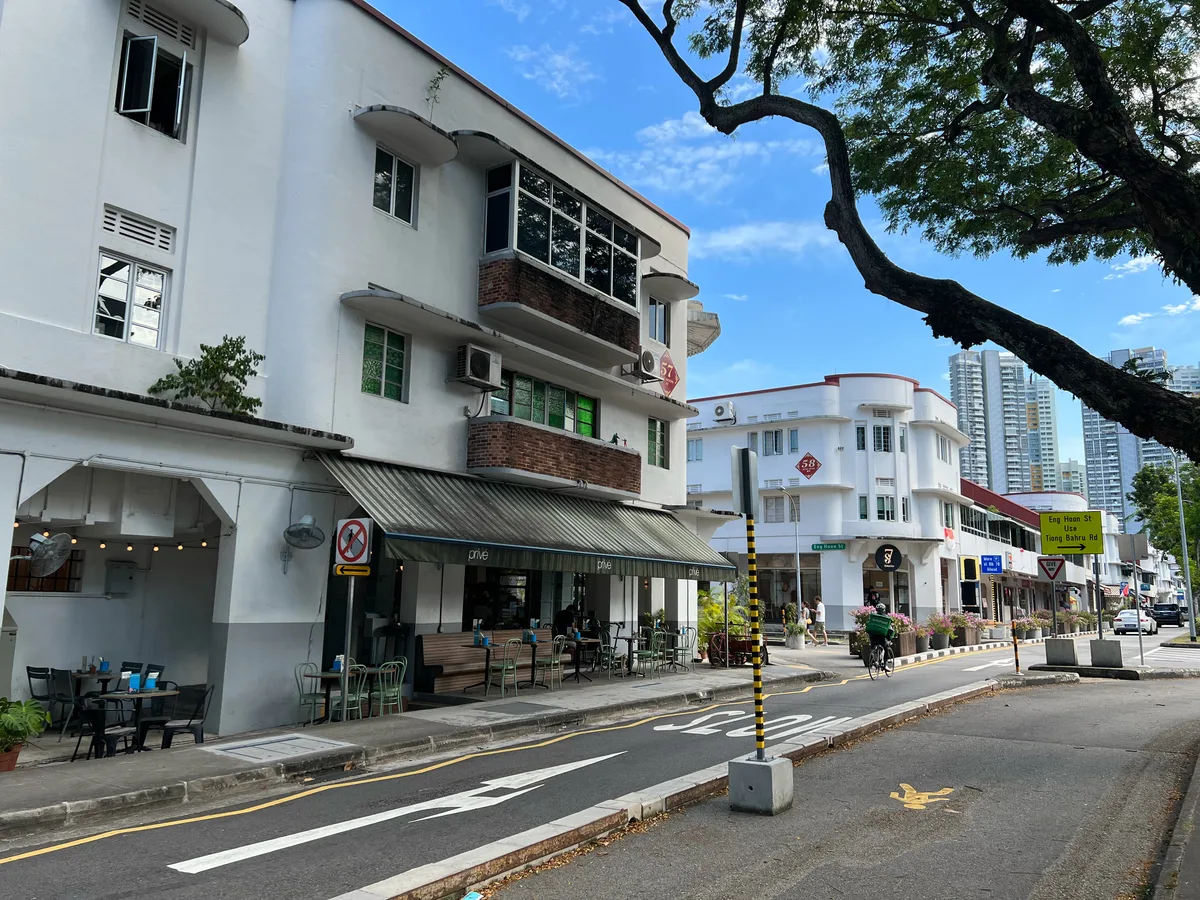
Tiong Bahru Road street corner with shophouses and cafés

Singapore sits 1.3° north of the equator. The sun rises almost due east and sets almost due west throughout the year, with very little seasonal variation. This means the direction of light is predictable and consistent Yong Siak Street’s east-facing facades get morning light, Eng Hoon Street’s north-facing facades get midday light, and so on. The practical consequence: you can plan exact shot locations by arrival time.

7–8:30am
Best Light
Low angle, warm tone, raking across facades. Staircase wells lit from top. Market at full energy.
8:30–10am
Good Light
Sun higher, still directional. East facades still good. Crowds beginning.
10am–4pm
Flat / Harsh
Overhead sun, high contrast, no raking. Shadows in wrong positions. Avoid for architecture.
4–6:30pm
Afternoon Good
West facades lit. West side of conservation area photographs well. Crowds thinner.

The 10 Best Photo Spots Specific Guidance

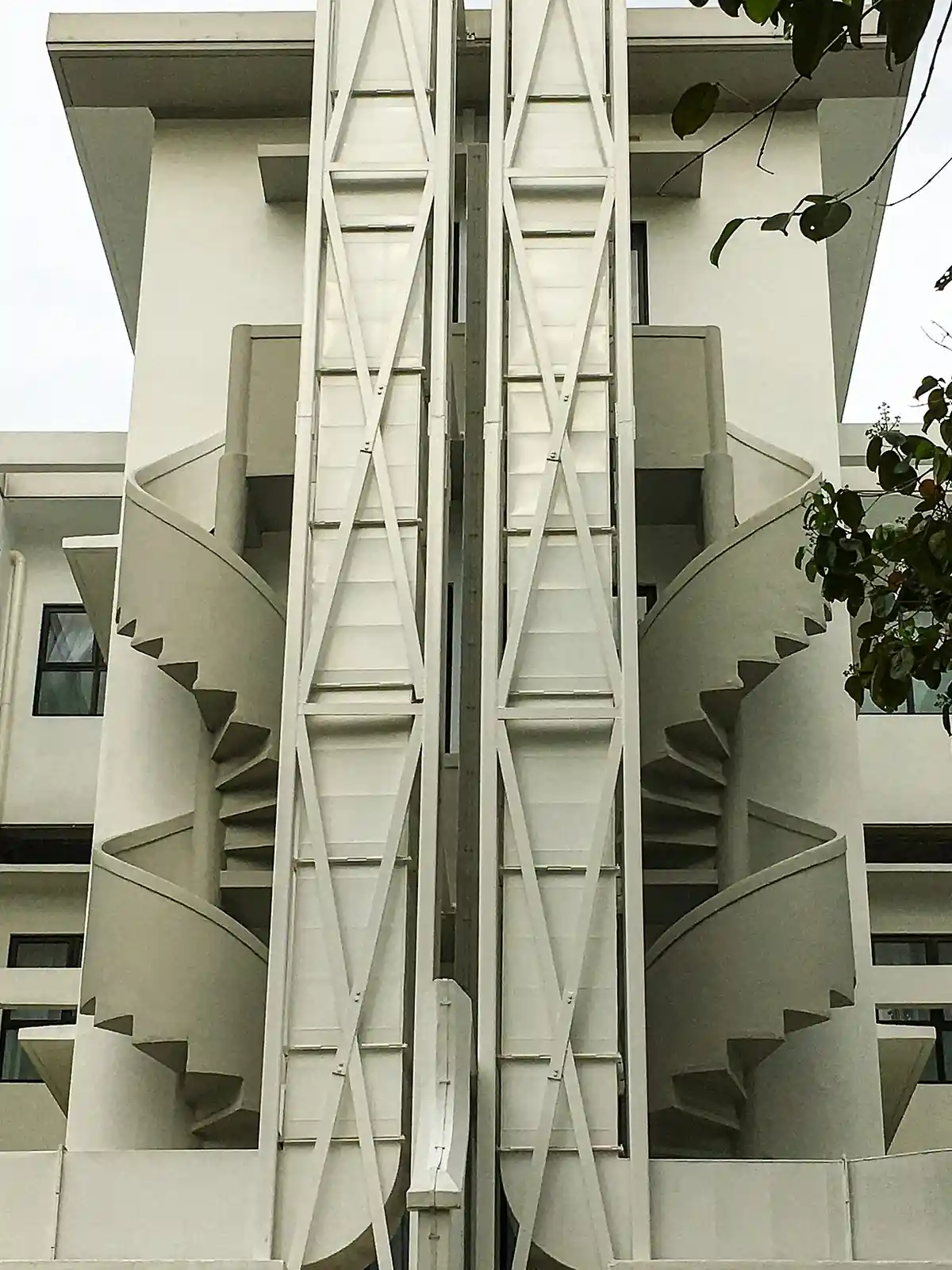
The Spiral Staircase Kim Pong Road Blocks
Spiral staircases on a Tiong Bahru residential block, Singapore
1
SIGNATURE
Architecture · Most Reproduced Shot
Kim Pong Road residential blocks · Enter any SIT block ground floor void deck
7–10am · Top light entersVertical · shoot directly upGround floor public do not go up

The spiral staircase shot is the most reproduced Tiong Bahru photograph the helical concrete stair winding upward inside the cylindrical tower, with a circle of light at the top. The composition is determined by the architecture: stand at the ground-floor landing, look directly up, shoot vertically. The stair’s geometry and the circular tower opening do the compositional work; the photographer’s job is to be positioned at the correct time and to not introduce elements that disrupt the composition.

The light enters the staircase well from the circular opening at the top. Before 10am, when the sun is still low enough to angle into the opening, the top light is warm and directional it catches the stair’s curved concrete surface from above and creates a shadow pattern on each step that gives the photograph its three-dimensional quality. After 11am the light is overhead and flat; the stair is evenly lit, the shadows disappear, and the photograph loses its drama.

The Shot
Position: Ground-floor landing, directly below the staircase centre · Orientation: Vertical (portrait), camera pointing directly up · Focal length: Wide angle (14–24mm or phone ultra-wide) captures more of the stair’s length; standard (35mm) captures the top-light drama with less stair · Settings: Expose for the top opening the stair will be darker than the sky, which is correct · Timing: 8–10am best; before 8am if direct top-light warmth is the goal · Phone: Switch to ultra-wide, point directly up, hold steady the architecture is stable so a slow shutter is possible
What to Avoid
Arriving after 11am when the top light is overhead and flat · Using a flash (destroys the shadow depth that makes the shot) · Including other people in the frame without coordination residents use the staircase; step aside and allow them to pass, then shoot in the clear window · Shooting from the upper landings (disrupts residents and is unnecessary the ground-floor composition is the canonical one)

Yong Siak Street East Facade Five-Foot Way Colonnades

2
ARCHITECTURE
Street Facade · Five-Foot Way
Yong Siak Street, east (right) side walking south · Full 260m length
7–9am · East facade in sunHorizontal · from within the five-foot wayCrowded 9:30am+ weekends

Yong Siak Street’s east-facing shophouse facades receive direct morning sunlight between approximately 7am and 9am, when the sun is low enough to rake across the horizontal banding and make the facade’s surface relief legible in photograph. The same facades are in shadow or flat ambient light for most of the rest of the day. This is the most important timing constraint in the conservation area: the Yong Siak facade shot is a morning-only image.

The five-foot way colonnade the covered pedestrian walkway running beneath the upper-floor overhang provides the best compositional element of the street. Shooting from within the five-foot way, with the column rhythm receding toward the vanishing point and the shophouse facade visible between the columns, produces the conservation area’s second most reproduced photograph after the spiral staircase. The key is the column spacing: stand at one column, align the camera with the column rhythm, and shoot along the five-foot way’s length. The receding columns create a perspective compression that reads as deep even in a relatively short street.

The Shot
Position: Within the five-foot way, aligned with the column row · Orientation: Horizontal (landscape), shooting along the five-foot way length · Focal length: Wide angle (20–35mm) exaggerates the column recession; standard (50mm) gives a more natural perspective · Timing: 7–9am when east facade is lit · People: Early morning the street is empty by 9:30am visitors fill the five-foot way and the composition requires patience or early arrival
The Cafés Are Not the Subject
The best photographs of Yong Siak Street are of the architecture the column rhythm, the facade banding, the five-foot way light not of the café frontages. The Forty Hands storefront and the Books Actually facade appear in hundreds of thousands of photographs; the column colonnade photographed from within the five-foot way before 8am is rarer and more interesting. Shoot the architecture, not the signage.

The Curved Corner Yong Siak / Eng Hoon Junction

3
STREET
Street Corner · Curved Architecture
Junction of Yong Siak Street and Eng Hoon Street · Corner building
7–9am or 4–6pm45° angle · shoot the corner

The curved corner at the Yong Siak / Eng Hoon Street junction is the conservation area’s most architecturally distinctive building element a smooth quarter-cylinder of reinforced concrete wrapping continuously from one street elevation to the other. Photographically, it requires a specific approach: the curve is only visible as a curve when photographed at approximately 45 degrees to both street elevations simultaneously. Photographed from directly in front of either elevation, it appears flat; photographed from the street corner opposite, the curve reads correctly.

Stand at the opposite corner of the Yong Siak / Eng Hoon junction and shoot across the intersection toward the curved building corner. In the early morning the east-facing elevation of the building catches the sun and the curve is thrown into relief by the light-shadow boundary at its edge. The curved corner is most visible when there is a tonal or lighting difference between its two elevations shadow on one face, light on the other, with the curve between them.

The Shot
Position: Opposite corner of the Yong Siak / Eng Hoon junction, approximately 10–15 metres from the building · Orientation: Horizontal, 45° to both street elevations · Focal length: Standard (35–50mm) gives the correct building scale · Timing: 7–9am (east elevation lit) or 4–6pm (west elevation lit, reflected light on east curve) · Include: Both street elevations in frame to show the curve’s continuity

Yip Yew Chong Murals Moh Guan Terrace

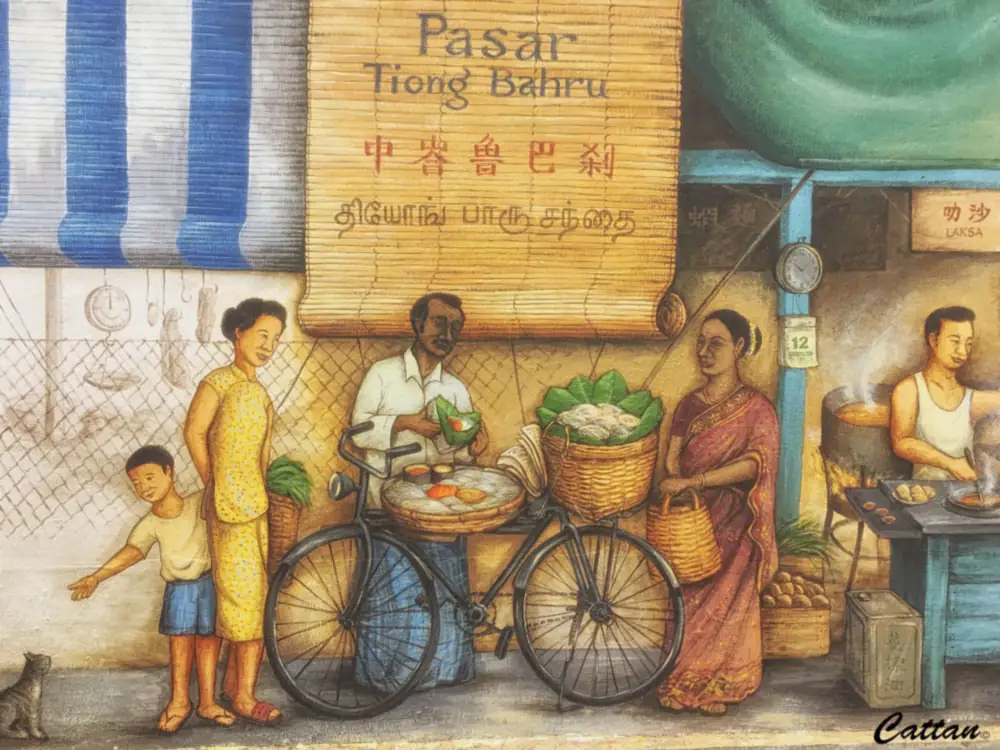
Yip Yew Chong Murals at Moh Guan Terrace
4
HERITAGE
Street Art · Heritage Murals
Moh Guan Terrace · HDB block end walls · Not signposted from Yong Siak Street
8am–noon · North-facing, no harsh sunStraight-on · detail and full-wall shotsUsually uncrowded

The Yip Yew Chong heritage murals on the HDB block end walls of Moh Guan Terrace are the most photogenic large-scale surfaces in the Tiong Bahru neighbourhood large-format realistic paintings depicting the estate’s resident life across the decades, painted directly on the concrete. The murals face north or northwest, meaning they receive consistent, non-directional light throughout the morning and early afternoon ideal for photographing flat painted surfaces, where harsh directional light creates glare and shadow that obscures the image detail.

Two distinct shot types work at the murals: the full-wall shot from sufficient distance to capture the complete composition (typically 15–25 metres from the wall), and the detail shot of specific elements within the mural (figures, objects, architectural details painted with sufficient precision that close-up crops reward attention). Both work throughout the morning window. The murals are typically uncrowded finding them requires the specific turn onto Moh Guan Terrace, which most visitors do not make.

The Shot
Full wall: 15–25m from the mural, horizontal frame, include some foreground for scale · Detail: 2–5m from specific elements, any orientation · Timing: Anytime 7am–noon; north-facing means consistent light · Include people: A resident passing in front of the mural creates scale reference the murals are large and without a human figure the full scale is not apparent · Phone: Standard camera (not ultra-wide) for the full wall ultra-wide distorts the mural’s proportions

Tiong Bahru Market Interior Hawker Centre
Tiong Bahru Market Interior
5
MARKET
Hawker Culture · Food Photography
30 Seng Poh Road · Ground Floor Hawker Centre · From 6:30am
7–9am · Full energy, natural lightBoth environment and food close-upBusy 7:30–9:30am but energetic

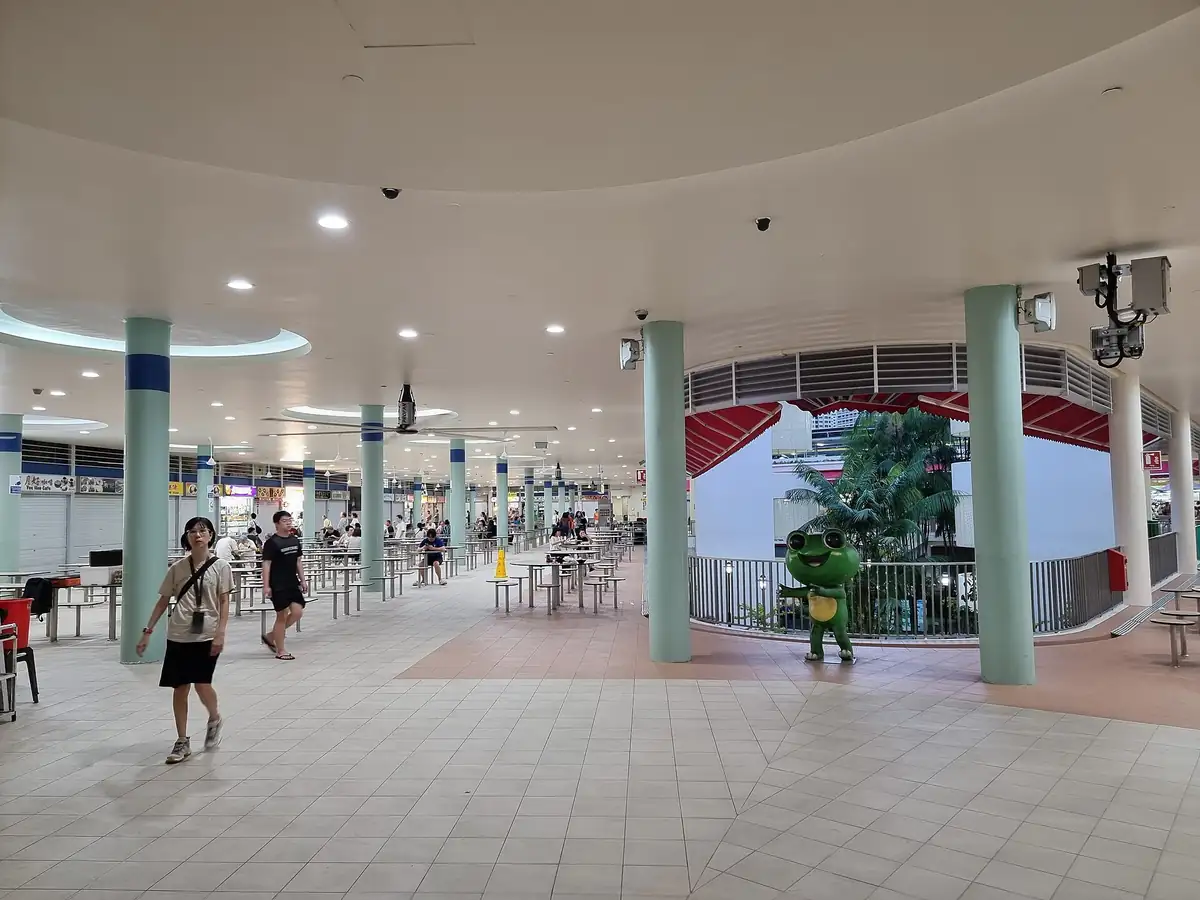
The Tiong Bahru Market ground-floor hawker centre at 7:30–9am is Singapore’s hawker culture at its most photogenic the stalls in full operation, the steam from noodle pots, the kueh laid out on the counters, the residents eating at communal tables, the ceiling fans and the fluorescent-tinged ambient light of the covered hawker hall. The natural light enters the hawker centre from the open sides (the market is not air-conditioned; it is an open-sided covered space), creating a diffuse, relatively even light that is better for food and people photography than the harsh direct sun outside.

Two categories of photograph work at the market: the environment shot (the wide view of the hawker hall, stalls in operation, residents at tables shoot from the market entrance or from an elevated position on the ramp to the upper floor wet market) and the food close-up (the chwee kueh on the Jian Bo counter, the freshly pulled kopi-o at the drinks stall, the ang ku kueh arranged on the kueh stall surface). Both require being present before 9am when the market is at its most energetic and the food is at its freshest presentation.

The Shot
Environment: From the market entrance or the ramp, horizontal, wide angle include hawker stalls, ceiling structure, and people at tables · Food close-up: Get as close as the stall vendor’s comfort allows; ask permission before shooting at the stall counter · Chwee kueh: Shoot the plate on the table within 5 min of serving the chye poh gloss fades quickly · Kopi: The cloth-sock pulling technique at the drinks stall is specific to Singapore 5 seconds of video captures it better than a still
Market Photography Etiquette
Do not photograph vendors without implicit or explicit permission make eye contact, smile, and proceed only if they nod or continue working without concern · Do not block the stall counter while photographing · Do not use flash inside the hawker centre · Eat what you photograph at the food stalls ordering for a photograph and leaving is noticed and resented · Photograph other diners only with awareness that these are residents eating their morning meal, not participants in a staged scene

Tiong Bahru Road Residential Blocks Porthole Windows at Scale
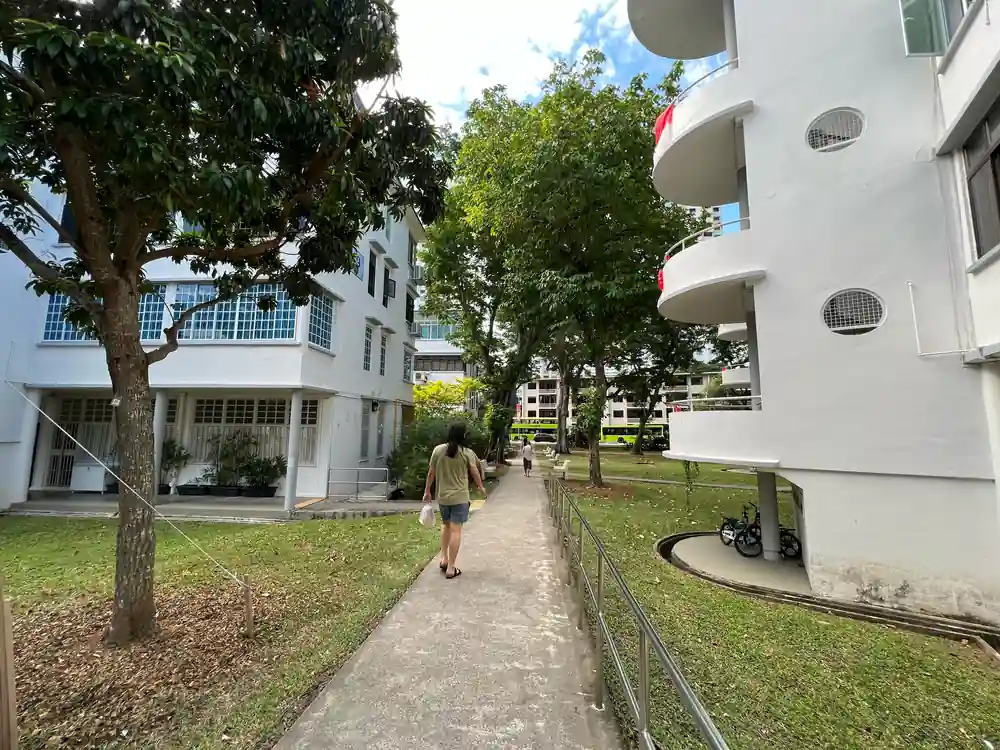
Tiong Bahru Road Residential Blocks
6
ARCHITECTURE
Residential Blocks · Full-Scale Facades
West side of Tiong Bahru Road · Blocks 78–85 · Viewable from the footpath
7–9am · West facades catch early sunHorizontal · from across the roadTraffic on Tiong Bahru Road use footpath

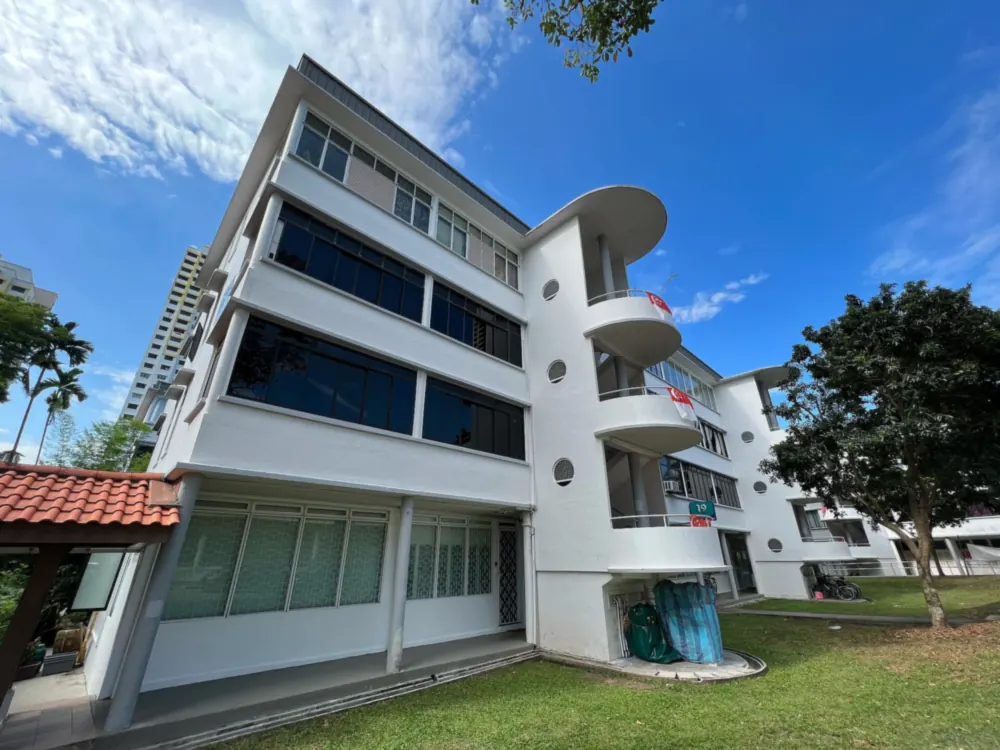
The residential blocks along the western side of Tiong Bahru Road visible from the footpath on the east side of the road show the conservation area’s most monumental architectural scale. From across the road, the staircase tower at the block corner, the sequence of porthole windows at each landing level, and the continuous horizontal banding are all visible simultaneously in a single frame. This is the composition that most completely expresses the streamline moderne vocabulary of the conservation area.

The west-facing facades of these blocks receive direct morning sun from approximately 7am, when the low eastern sun reflects off the Tiong Bahru Road and adjacent surfaces to light the west side. After 9am the west elevation is in shadow until late afternoon. The block facades are also photographable in the 4–6pm window when the setting sun lights the west elevation directly the warm afternoon light on the cream plaster facade produces a different, softer quality than the morning light.

The Shot
Position: East footpath of Tiong Bahru Road, approximately 20–30m from the blocks · Orientation: Horizontal, include one full staircase tower and at least one block bay · Focal length: Standard to short telephoto (50–85mm) compresses the facade and makes the banding pattern more prominent · Include: The staircase tower corner as the compositional anchor position it at one third of the frame · Timing: 7–9am or 4–6pm; avoid midday when the west facade is in shadow

Eng Hoon Street Evening Five-Foot Way

7
NIGHT
Night Photography · Conservation Area Lit
Eng Hoon Street · Between Yong Siak and Kim Pong Road · After 7pm
7–9pm · Lit shopfronts, low ambientHorizontal · along the streetQuieter than morning

The Tiong Bahru conservation area at night is underrepresented in the neighbourhood’s photography compared to its actual visual quality. Eng Hoon Street after 7pm when the cafe and restaurant ground floors are lit, the upper residential floors show warm window light, and the five-foot way is in deep shadow broken by the lit shop fronts produces a photograph that reads as very different from the morning conservation area shots, in a genuinely interesting way. The juxtaposition of the 1930s facade geometry and the contemporary cafe interiors is most explicit at night, when the shophouse shell recedes and the lit interior is the dominant visual element.

Merci Marcel’s terrace at 56 Eng Hoon Street at 8pm the outdoor tables under the five-foot way canopy, the natural wine glasses catching the terrace light, the shophouse facade above lit from below is the conservation area’s most frequently photographed evening scene. The shot works best with some foreground interest (a glass, a plate, a person at the table) to anchor the mid-ground facade composition.

The Shot
Position: Within or just outside the five-foot way on Eng Hoon Street · Timing: 7:30–9pm when interior lights are on and ambient darkness is sufficient · Settings: Night mode on phone; ISO 800–1600 on camera; use a surface for stability rather than flash · Composition: Include one lit interior through a shophouse opening and the dark five-foot way structure above · Colour: The warm artificial light against the blue-hour sky at 7:30pm produces the most interesting colour palette

Tiong Bahru Bakery Kouign-Amann on the Five-Foot Way
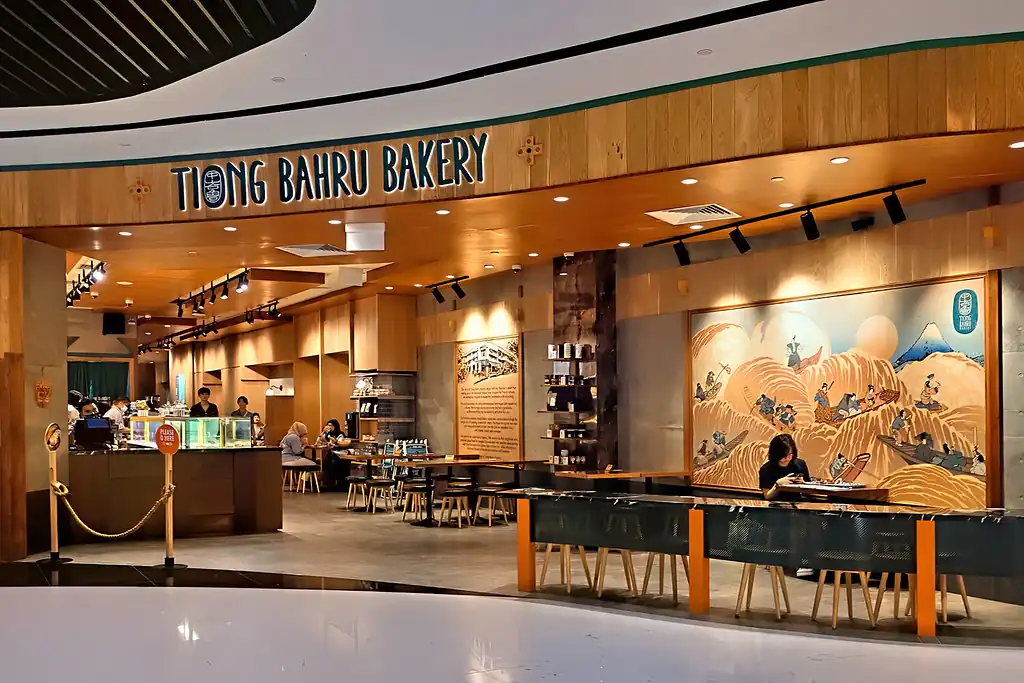
Tiong Bahru Bakery shopfront
8
FOOD
Food Photography · Conservation Area Pastry
56 Eng Hoon Street · Five-foot way table · Before 9:30am weekends
8–9:30am · Morning light + fresh pastryOverhead or 45° on the tableSell-out risk after 9:30am weekends

The kouign-amann at the five-foot way table outside 56 Eng Hoon Street is the conservation area’s most photographed food item the caramelised Breton pastry in the streamline moderne shophouse context. The shot works because the subject (the pastry’s caramelised golden surface) and the setting (the five-foot way’s dappled morning light, the tiled floor, the shophouse facade) are both visually interesting and spatially related in a way that a café table shot rarely achieves.

Photograph the kouign-amann within 10 minutes of receiving it the caramelised sugar crust is most reflective and most visually distinct when the pastry is still warm. As it cools, the Singapore humidity softens the crust and the surface loses the gloss that makes the photograph. The morning light on the east-facing five-foot way at Eng Hoon Street is optimal at 8–9am; later in the morning the table is in shadow. Include one or two contextual elements the coffee cup, the five-foot way tile pattern visible in the foreground to anchor the food item in its setting rather than floating it against a neutral background.

The Shot
Position: Five-foot way table outside the bakery · Orientation: Overhead (flat lay) for the pastry surface detail, or 45° for context with the five-foot way background · Timing: Within 10 minutes of buying · Light: Morning (8–9am) uses the natural east-facing five-foot way light; later use the café interior light · Eat it immediately after photographing the shot takes 60 seconds, not 5 minutes

Bird Corner Block 85 Tiong Bahru Road (Weekend Mornings)

9
CULTURE
Living Heritage · Bird Corner
Block 85 void deck · 7–9am weekends only · Free
7–8:30am weekends onlyHorizontal · wide to capture contextDisperses by 9:30am

The weekend songbird gathering at Block 85 void deck is the most photogenic living cultural tradition in the Tiong Bahru neighbourhood the ornate bamboo cages hanging at eye level, the older male residents in conversation, the birds visible within the cages, the void deck structure framing the scene. It is also the most ethically complex photography subject in the neighbourhood: the residents are not performing for visitors, they are participating in a private community ritual that happens to be in a public space. The approach to photographing this must reflect that.

Stand at the edge of the void deck. Do not approach the cages without invitation. Use a longer focal length (85–135mm on a camera, or the phone’s telephoto mode) to photograph from a comfortable distance that does not intrude on the gathering. The bird photography the close-up of the cage, the bird inside, the owner’s hands is the most technically challenging and the most rewarding if achieved without intrusion. The wider shot that includes the owner, the cage, and the void deck context is more achievable and more complete as a document of the tradition.

The Shot
Position: Edge of the void deck, minimum 5 metres from the nearest cage · Focal length: 85–135mm on camera; telephoto mode on phone · Timing: 7–8:30am Saturdays and Sundays the gathering is largest in this window · Approach: Stand quietly, observe for 5 minutes before raising a camera establish your presence as respectful before photographing · Permission: If an owner makes eye contact and nods, they have implicitly consented; if they turn away or indicate discomfort, do not photograph that individual
Ethical Note
The bird corner is a private community tradition in a public space. The residents are not a tourist attraction. Photographing respectfully from a distance, with awareness of individual reactions, without flash or aggressive approach is the only appropriate approach. If in doubt, photograph the cages rather than the people. The visual interest of the ornate bamboo cage construction does not require human subjects.

Wet Market Upper Floor 30 Seng Poh Road
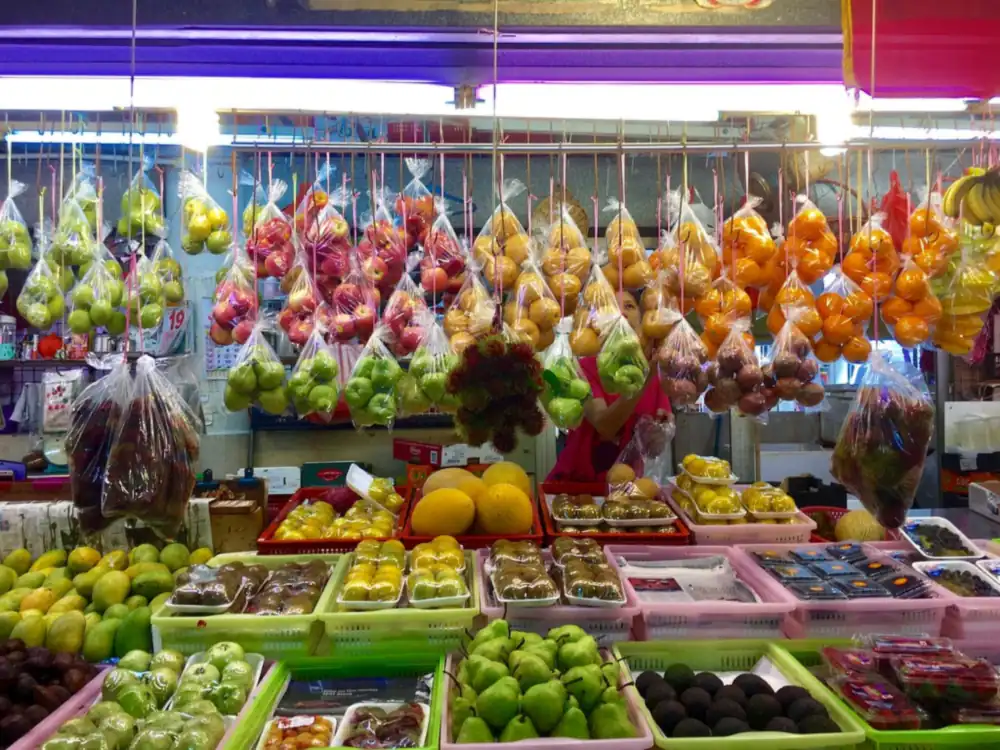
Wet Market Upper Floor
10
ATMOSPHERE
Wet Market · Produce + Vendors
Tiong Bahru Market · Upper floor · Via the ramp · From 6am
7–9am · Peak vendor activityBoth · environment and detailQuieter than ground floor

The wet market on the Tiong Bahru Market’s upper floor is the most overlooked photography location in the neighbourhood most visitors never go upstairs, and most photography guides focus on the conservation area street architecture. The wet market at 7–8am is a genuine Singapore produce market at full operation: the fish vendors with their iced displays, the vegetable stalls with the morning’s fresh delivery laid out, the residents shopping for the day’s cooking, and the specific light quality of a covered market with open sides diffuse, even, flattering to both produce and people photography.

The upper floor wet market also provides the best elevated view of the lower hawker centre from the top of the ramp, looking down over the stall roofs to the hawker tables below, a wide-angle photograph captures the scale and energy of the market in a way impossible from the ground floor level. This overview shot, with the ceiling fans and the stall canopies in the mid-ground and the resident diners in the background, is the photograph that most completely represents what the Tiong Bahru Market actually is.

The Shot
Overview: From the top of the ramp, wide angle (14–20mm), looking down into the hawker centre include the stall canopies, the ceiling fans, and the diners · Produce: 0.5–1m from the stall display, natural light, no flash · Timing: 7–9am for full vendor activity and produce presentation · Permission: Same as ground-floor market implicit permission from vendors who continue their work; explicit discomfort means step back

What Actually Photographs Well vs What Doesn’t
Tiong Bahru Road at dusk
Works Well
Spiral staircase (before 10am)
Geometry, top light, vertical composition inherently photogenic
Doesn’t Work
Spiral staircase (after 11am)
Flat overhead light eliminates the shadow depth that makes the shot
Works Well
Five-foot way colonnades (morning)
Column recession, morning raking light on east facade
Doesn’t Work
Five-foot way with café furniture (weekends)
Tables and chairs break the colonnade rhythm and obscure the tile floor
Works Well
Murals on Moh Guan Terrace
North-facing, consistent light, large scale, specific subject
Doesn’t Work
Tiong Bahru from above (drone)
No elevated vantage the neighbourhood reads as generic HDB estate from above
Works Well
Market food at the table (morning)
Diffuse hawker centre light, fresh food presentation, authentic context
Doesn’t Work
Tiong Bahru Bakery storefront wide shot
In hundreds of thousands of existing images there is nothing new to add at this angle
Works Well
Evening Eng Hoon Street (7:30–9pm)
Warm interior light against the dark facade a composition that looks genuinely different
Doesn’t Work
Portraits in front of café signage
Not specific to Tiong Bahru any café in any city could be behind you

Photography Tips for Tiong Bahru

Tiong Bahru Road residential blocks
  • Arrive before 8am for architecture. The Tiong Bahru conservation area photographs well in morning light and poorly in midday flat overhead light. The specific window 7:30–9am gives raking light on the east facades, top light in the staircase wells, and an empty street. By 9:30am on weekends, visitors fill the five-foot way and the staircase wells are occupied. The photograph you want requires the early arrival.
  • Use the ultra-wide for the staircase, the standard lens for the facades. The spiral staircase shot requires the ultra-wide to capture the full length of the stair’s height. The facade shots on Yong Siak Street photograph best with a standard or short telephoto (35–85mm equivalent) the ultra-wide distorts the horizontal banding into a curve. Different locations need different focal lengths; changing between them takes 5 seconds on a phone.
  • The murals need a human figure for scale. The Yip Yew Chong murals on Moh Guan Terrace are large a single mural can be 10–15 metres wide. Without a person in the foreground for scale reference, the photograph does not communicate the mural’s actual size, and the painting looks like a postcard rather than a wall. Wait for a resident to walk past, or ask a companion to stand in the foreground.
  • Do not use flash anywhere in the market or at the staircase. Flash destroys the ambient light quality that makes the hawker centre and the staircase photographically interesting. The diffuse light of the covered market and the top-lit shadow depth of the staircase well are both light situations that a camera’s automatic flash mode will try to correct turn off flash before entering both locations.
  • The most overshot location in Tiong Bahru is the Tiong Bahru Bakery exterior. It appears in hundreds of thousands of existing photographs. The composition (facade sign, shophouse, morning queue) is fully occupied. If your goal is an image that contains something not already on Instagram, go upstairs to the wet market, find the Moh Guan Terrace murals, or photograph the five-foot way before 8am.
  • Eat before photographing at the market stalls. Ordering food for a photograph and leaving it uneaten is visible and resented by hawker vendors who are cooking for residents who eat every morning, not for photographers who visit once. Order what you actually want to eat, photograph it quickly, then eat it. The photograph takes 60 seconds. The chwee kueh deteriorates faster than 60 seconds lost.
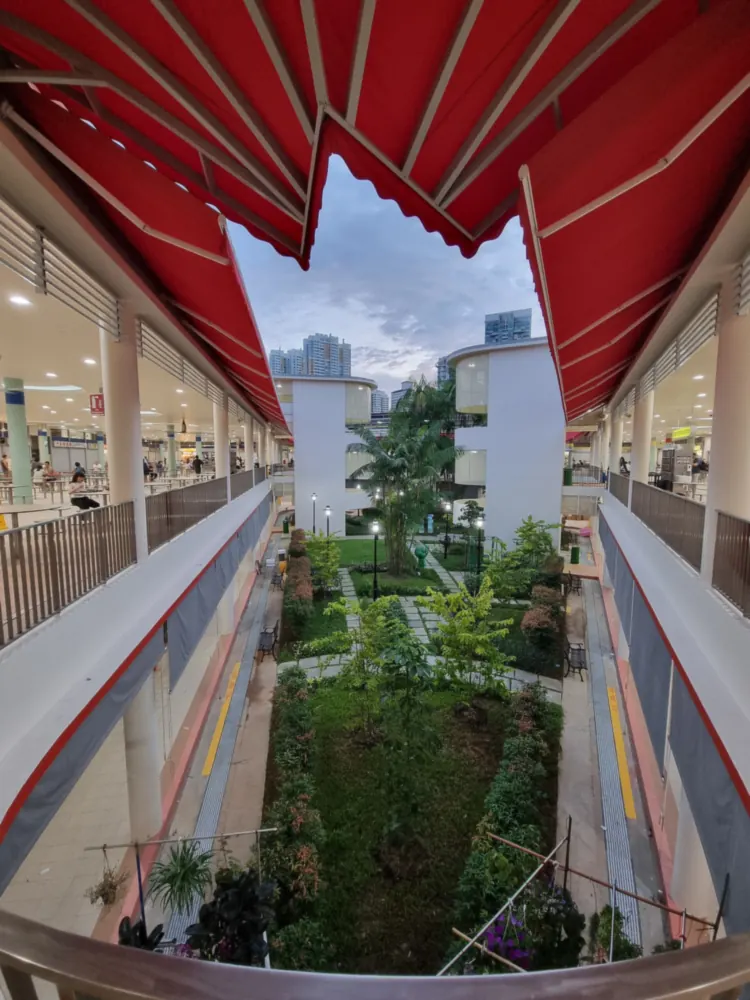
Tiong Bahru Market courtyard garden

Frequently Asked Questions

7–9am for the architecture the conservation area’s east-facing facades receive morning raking light in this window, the staircase wells have their best top light before 10am, and the five-foot way is empty of visitors. The 4–6pm afternoon window is second-best for the west-facing facades and the evening light on Eng Hoon Street. Midday (10am–4pm) is the worst window for architecture photography in Tiong Bahru overhead flat light removes the facade relief that makes the buildings photographically interesting.

No formal photography restrictions in the conservation area’s public spaces the streets, the five-foot ways, and the void decks are public spaces where photography is permitted. The market ground floor is a public hawker centre; photography is permitted with the normal social courtesy of not blocking the stall counter and respecting vendor comfort. The staircase wells are accessible from the ground-floor void deck ground-floor access is public, upper-floor residential access is private. Drone photography requires CAA Singapore permits for any drone flight in Singapore; the residential density of the Tiong Bahru estate means most drone flights would require specific approvals.

Any camera that can shoot in natural light without requiring flash will work the locations in this guide do not require specialist equipment. A modern smartphone in portrait or ultra-wide mode handles most shots well. For the staircase well, the ultra-wide mode is useful; for the facade shots, the standard mode is more appropriate. A camera with a wide-angle lens (20–35mm equivalent) handles the staircase and the five-foot way; a standard lens (50mm equivalent) handles the facade shots and the mural detail. Flash is never appropriate at any Tiong Bahru location covered in this guide.

The spiral staircase shot is technically straightforward stand at the ground-floor landing and point the camera directly up. The challenge is timing: arriving before 10am to catch the top light that makes the shadow depth, and finding a clear window when the staircase is not being used by residents. On weekday mornings before 9am, the staircase wells on Kim Pong Road are typically clear. On weekend mornings, other visitors may be present patience and an early arrival produce a clear shot within a few minutes.

Both are in public spaces and photography is permitted. The appropriate approach in both cases is the same: establish your presence as non-intrusive before raising a camera, photograph from a comfortable distance rather than thrusting a lens toward a person or a bird cage, and respond to any indication of discomfort by stepping back. The vendors at the market are working; they are not performers. The bird corner residents are conducting a private community activity in a public space. Both can be photographed respectfully; both are damaged as subjects by intrusive or disrespectful photography approaches.

Brandon’s Verdict

The best Tiong Bahru photograph you can take is not the one on Instagram. It is the staircase well at 7:45am on a Tuesday when no one else is there. Or the murals on a Sunday morning with a resident walking past in the foreground. Or the market counter at 8am with the chwee kueh just plated.

The photographs of Tiong Bahru that accumulate millions of views are almost always the same six or seven shots the staircase, the five-foot way colonnade, the kouign-amann, the Tiong Bahru Bakery exterior. All of these are good photographs. None of them is the most interesting photograph available in the neighbourhood. The most interesting photographs require going to the places most visitors skip (Moh Guan Terrace, the wet market upper floor, the Guan Chuan Street provision shops) and arriving at the time most visitors haven’t set their alarm for. The neighbourhood rewards the early and the curious more than the technically skilled. The light at 7:30am in the staircase well does not require a good camera. It requires being there.

Brandon Teo,