
Kim Pong Road Singapore | Food, Shopping & Things to Do
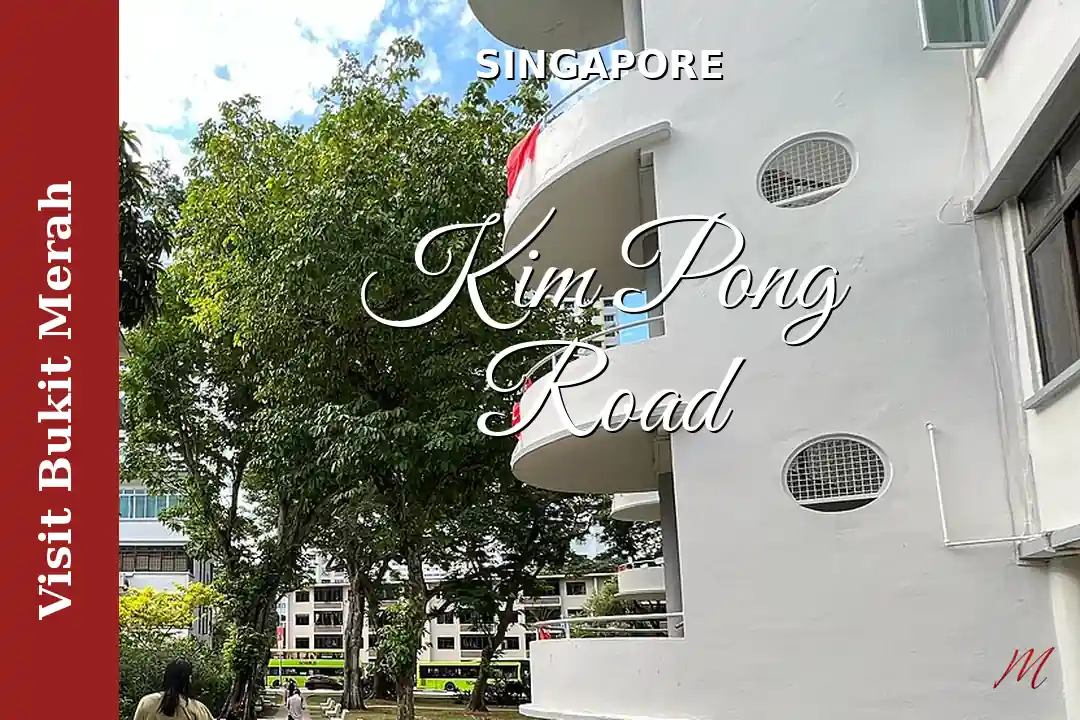
Kim Pong Road is the conservation area’s best-kept secret the street that serious architecture visitors come to Tiong Bahru specifically to see, and that most café visitors never find. The spiral staircases are here. The porthole windows are here. The sharpest curved corner in the whole SIT estate is here. The streamline moderne details that appear on every Tiong Bahru postcard were photographed on Kim Pong Road. It is also the quietest street in the conservation area predominantly residential, with fewer cafés and shops than Eng Hoon or Yong Siak, which means the 1936 architecture is visible without the weekend visitor crowd competing for your attention. This guide covers what is on Kim Pong Road, why the architecture matters, and how to use it as the connector street that completes the conservation area circuit.
Kim Pong Road What Kind of Street Is It?
Kim Pong Road runs roughly east–west through the Tiong Bahru SIT conservation area, connecting Tiong Bahru Road at its eastern end to Seng Poh Road at its western end. It sits between Eng Hoon Street to its south and the northern boundary of the conservation area, crossing both Eng Hoon Street and Yong Siak Street at perpendicular junctions mid-route. At approximately 400 metres, it is the longest of the conservation area’s interior streets and the most purely residential of the three parallel conservation lanes.
What distinguishes Kim Pong Road from every other street in the conservation area is that the architecture is the attraction rather than a backdrop for something else. Eng Hoon Street has the bakery and the wine bar; Yong Siak Street has the bookshop and specialty coffee. Kim Pong Road has the open-air spiral staircases, the porthole windows at staircase landings, the aerodynamic curved corner at its junction with Eng Hoon Street, and the most complete set of uninterrupted 1936–1941 SIT residential facades in the conservation area because the street has relatively few ground-floor tenants converting the shophouse units for commercial use, the upper-floor residential character of the original design is more legible here than anywhere else in Tiong Bahru.
Art Deco vs Streamline Moderne the correct terminology for Kim Pong Road: The Tiong Bahru conservation buildings are commonly called “Art Deco” in popular writing, which is approximately correct but not precise. Art Deco is the decorative style of the 1920s–30s, characterised by geometric ornament and symmetry. Streamline Moderne is its later phase applied aerodynamics, horizontal emphasis, curved corners, smooth rendered surfaces. The SIT buildings are Streamline Moderne. On Kim Pong Road, the distinction is visible in the building details: there is very little applied geometric ornament, but there is a great deal of horizontal moulding, curved surface treatment, and the porthole window that is Streamline Moderne’s signature marine vocabulary translated into residential housing. Both terms are used in this guide; the architecture means either.
The street’s character is morning-weighted and residential in a way that makes it feel genuinely different from the café streets parallel to it. On a weekday morning before 9am, Kim Pong Road has residents going to work, the occasional cat on a five-foot way step, and the specific quality of light that hits the smooth rendered plaster of the conservation block facades at a low angle from the east. On a weekend afternoon at noon, the same facades are in flat overhead light and the visitor crowd from Eng Hoon Street and Yong Siak Street has begun to spill onto Kim Pong Road via the cross-lane junctions. The street is at its best before 10am, in any weather.
Food & Restaurants on Kim Pong Road
Kim Pong Road is predominantly residential it has very few food addresses on the street itself. The food reason to visit Tiong Bahru is on the connecting streets: Tiong Bahru Market (Seng Poh Road, 3 min west), Loo’s Curry Rice (Tiong Bahru Road, 5 min east), and Merci Marcel (Eng Hoon Street, 2 min south).
Tiong Bahru Market Jian Bo Shui Kueh
Singapore Hawker · 30 Seng Poh Road · 3 min west: The neighbourhood’s hawker anchor chwee kueh from 6:30am, the correct first stop before the Kim Pong Road architecture walk
Walk west from Kim Pong Road onto Seng Poh Road and the market is 3 minutes away. The hawker centre ground floor opens at 6am; Jian Bo Shui Kueh at Stall 02-06 opens at 6:30am with steamed rice flour chwee kueh, five pieces for $3.50 the neighbourhood’s most time-sensitive and most irreplaceable food item. The correct Kim Pong Road visit sequence starts here: market breakfast first, then west along Kim Pong Road for the architecture before the visitor crowd arrives on Eng Hoon and Yong Siak at 9:30am.
Order this: Five-piece chwee kueh ($3.50) + kopi-o ($1.20) from the nearest kopi stall. Eat at a communal table. Then walk east on Seng Poh Road, turn right on Kim Pong Road, and start the architecture walk with a full stomach and an hour before the conservation area crowds arrive.
📍Address:30 Seng Poh Road · Stall 02-06 · 3 min west of Kim Pong Road
🕐Hours: From 6:30am · Closed Tuesdays · sells out before 10:30am weekends
💰Price: $ 5 pieces $3.50 · Cash or PayNow
Loo’s Hainanese Curry Rice
Hainanese Heritage · 78 Tiong Bahru Road · 5 min east: Heritage lunch at the eastern end of the Kim Pong Road circuit opens ~11am, cash only, closed Mondays
Walk east from Kim Pong Road onto Tiong Bahru Road and turn right (south) Loo’s Hainanese Curry Rice at No. 78 is 5 minutes from the Kim Pong Road junction. The 1946 institution produces Singapore’s definitive Hainanese curry rice: white rice, braised pork belly (kong bak), steamed cabbage, curry sauce ladled over everything. Cash only. Closed Mondays. Opens approximately 11am, sells out by 2pm. The natural lunch conclusion to a morning spent walking the Kim Pong Road architecture.
📍Address: 78 Tiong Bahru Road · 5 min east from Kim Pong Road
🕐Hours: ~11am until sold out · Closed Mondays · Cash only
💰Price: $ rice + 2–3 dishes ~$8–12
Merci Marcel
French-Influenced All-Day · 56 Eng Hoon Street · 2 min south: Natural wine, courtyard garden brunch 2 min from the Kim Pong Road / Eng Hoon Street curved corner, book ahead for weekends
Merci Marcel is 2 minutes south of the Kim Pong Road and Eng Hoon Street curved corner junction. The French-influenced all-day café and wine bar at 56 Eng Hoon Street is the conservation area’s best sit-down brunch option croque madame, smashed eggs, natural wine by the glass from an informed list, rear courtyard garden seating. The walk from the Kim Pong Road curve to Merci Marcel is 2 minutes and constitutes the natural first café stop after the architecture walk. Book at least 3 days ahead for weekend brunch; the courtyard fills entirely with reservations on Saturday and Sunday mornings.
📍Address: 56 Eng Hoon Street · 2 min south of the Kim Pong / Eng Hoon corner
🕐Hours: ~9am–11pm daily
💰Price: $$$ brunch $22–40pp · book 3–7 days ahead for weekends
More Food Near Kim Pong Road
Kim Pong Road’s food landscape is its connecting streets everything within a 5-minute walk. North: Tiong Bahru Road HDB coffeeshops (zi char dinner from 5pm, kopi from 7am). South via Eng Hoon Street: Tiong Bahru Bakery (No. 56, opens 7:30am, kouign-amann). West via Seng Poh Road: Tiong Bahru Market (opens 6am). East via Yong Siak Street: Forty Hands (No. 78, opens 7:30am) and Plain Vanilla (No. 1D, opens 8am). See the Tiong Bahru food guide for complete coverage.
Cafés Near Kim Pong Road
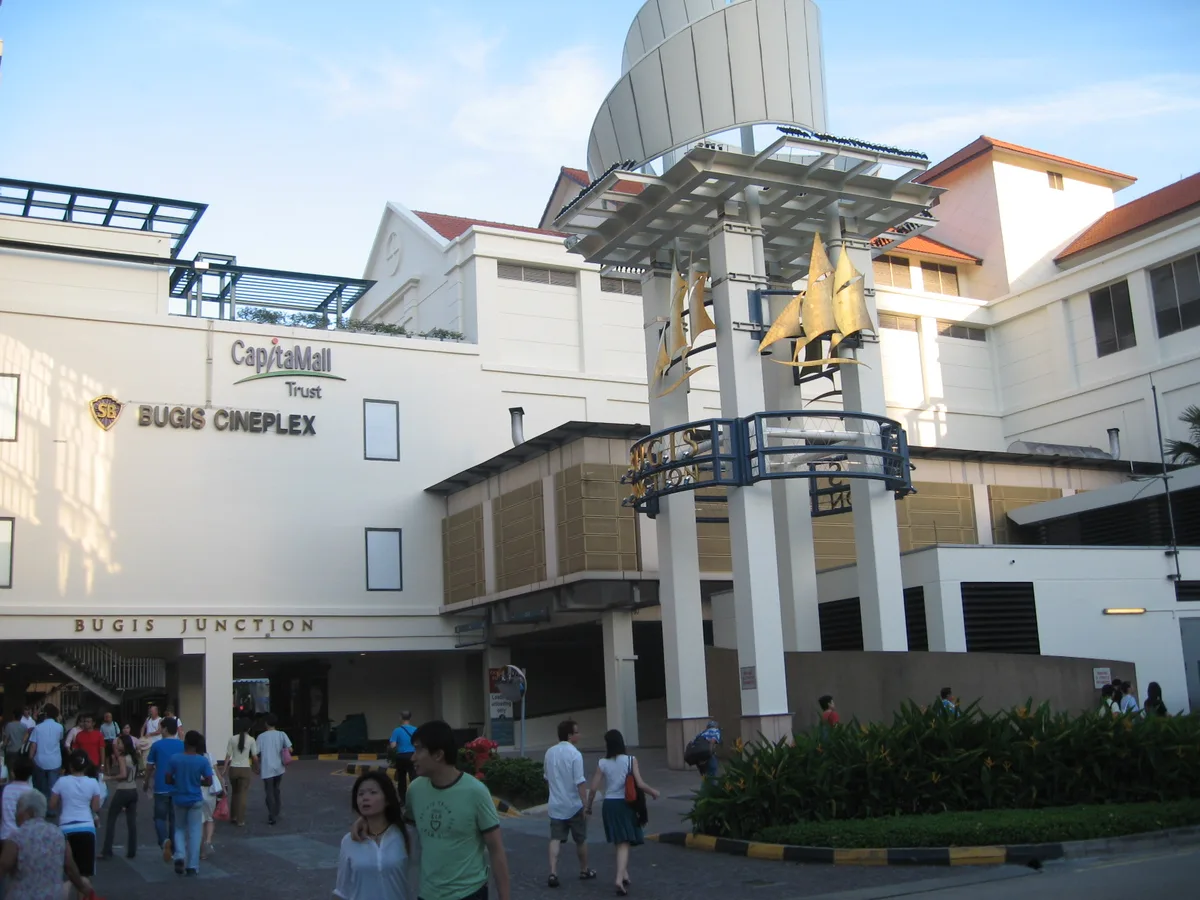
Kim Pong Road itself has no café addresses it is the conservation area’s residential spine, not its café strip. The best cafés are a 2–5 minute walk on the connecting streets.
Tiong Bahru Bakery
French Bakery · 56 Eng Hoon Street · 2 min south: Opens 7:30am · kouign-amann · flat white · the natural first café stop after the Kim Pong Road morning walk
Tiong Bahru Bakery at 56 Eng Hoon Street is the closest café to Kim Pong Road 2 minutes south from the curved corner junction. It opens at 7:30am, which makes it the correct café stop after an early morning architecture walk on Kim Pong Road: walk the street before 8:30am while the light is good and the crowd is absent, then turn south at the Eng Hoon Street junction for the kouign-amann ($5.50) and flat white. The five-foot way colonnade tables outside the bakery are 2 minutes from the curved corner that is Kim Pong Road’s most photographed architectural feature.
Order this: Kouign-amann ($5.50) + flat white ($5.50). Eat the pastry immediately on the five-foot way within 20 minutes of purchase while the caramel crust is still hot. The combination of the architecture walk and the pastry constitutes the complete Kim Pong Road morning.
📍Address: 56 Eng Hoon Street · 2 min walk south from Kim Pong Road junction
🕐Hours: 7:30am–8pm daily
💰Price: $$ kouign-amann $5.50 · flat white $5.50
⚠️Timing: Kouign-amann sells out 9:30–10:30am weekends arrive before 9am
Forty Hands
Specialty Coffee · 78 Yong Siak Street · 3 min east: Opens 7:30am · flat white $5.50 · colonnade seating · 3 min east of Kim Pong Road via any cross-lane
Forty Hands on Yong Siak Street is 3 minutes east of Kim Pong Road via the Yong Siak Street cross-junction. The flat white at $5.50 is the definitive Tiong Bahru coffee order; the colonnade tables face the conservation area shophouses across the lane. If you have already visited Tiong Bahru Bakery on Eng Hoon Street and want a dedicated coffee sit-down on the conservation area’s best café street, Forty Hands is the 3-minute walk from Kim Pong Road that delivers it. Opens at 7:30am, walk-in only.
📍Address: 78 Yong Siak Street · 3 min east of Kim Pong Road
🕐Hours: 7:30am daily
💰Price: $$ flat white $5.50 · food $14–22
The Kim Pong Road Café Strategy
Because Kim Pong Road has no cafés of its own, the correct sequence is to use the street as the architectural connector between café stops on the flanking streets. A practical morning: Tiong Bahru Bakery (Eng Hoon Street, 7:30am) → walk north to Kim Pong Road and east along its full length (architecture, 20 minutes) → Forty Hands (Yong Siak Street, via the Yong Siak junction at the eastern end of Kim Pong Road). Two café stops, one architecture walk, no doubling back.
Shops & What’s on Kim Pong Road
Kim Pong Road’s ground-floor units are predominantly residential or lightly commercial the street is not a retail destination. The architecture is the product on this street. Shops are on Yong Siak Street (2–3 min east).
The SIT Architecture Spiral Staircases & Porthole Windows
The Attraction · Kim Pong Road · Free to Walk: Open-air spiral staircase wells · circular porthole windows · aerodynamic curved corners · 1936 Streamline Moderne in uninterrupted form
The primary thing on Kim Pong Road is the architecture, and it is free to walk and photograph. The key details to observe:
The spiral staircase wells. Walk through the ground-floor corridor of any residential block facing Kim Pong Road and look upward. The open-air spiral staircase serves the upper residential floors from a central light well a 1936 solution to natural ventilation in tropical housing before air-conditioning. The spiral itself is a single continuous curve of reinforced concrete with a central void; looking up through the coils toward the open sky at the top is the specific photograph that appears on every Tiong Bahru architecture feature. The ground-floor corridor is publicly accessible as a through-route; the upper residential floors are private.
The porthole windows. At each staircase landing, a circular porthole window 30–40cm in diameter, set into the staircase wall lights the spiral from the side. This is the Streamline Moderne marine vocabulary applied to residential housing: the porthole is a ship’s window, and the SIT architects used it here as the decorative element in an otherwise spare building. Look for the portholes from the street they are visible in the staircase block facades along Kim Pong Road.
The curved corner at Eng Hoon Street. The junction of Kim Pong Road and Eng Hoon Street is where the conservation area’s most famous architectural detail is located the building wrapping the corner in a continuous curve rather than a right angle. This is the aerodynamic vocabulary of 1930s Streamline Moderne: the corner of a building treated as if the building were moving through air, the architecture of the Machine Age applied to working-class Singapore housing. Stand at this corner and look at the curve from the pavement the building continues without interruption from Eng Hoon Street to Kim Pong Road, the corner a single smooth arc.
📍Location: Kim Pong Road, throughout spiral staircases in all residential block corridors
💰Price: Free the street is public, the ground-floor corridors are through-routes
⚠️Note: Upper floors are private residential ground-floor corridor access only
Books Actually
Independent Bookshop · 9 Yong Siak Street · 3 min east: Singapore’s best independent bookshop · Short Story Dispenser free · Tue–Sun 10am–9pm · the correct non-architecture stop after Kim Pong Road
Books Actually at 9 Yong Siak Street is 3 minutes east of Kim Pong Road and is the correct non-food, non-architecture stop after the morning walk. The Short Story Dispenser at the entrance prints a free short story on receipt paper; the Math Paper Press shelf stocks Singapore literary fiction published by the shop’s own imprint. Open Tue–Sun 10am–9pm, closed Mondays. If the Kim Pong Road architecture walk ends before 10am on a Tuesday through Sunday, the bookshop is the natural next destination.
📍Address: 9 Yong Siak Street · 3 min east via Yong Siak junction
🕐Hours: 10am–9pm · Tue–Sun · Closed Mondays
💰Price: Books from $14 · Short Story Dispenser free
The Honest Kim Pong Road Shopping Summary
Kim Pong Road is not a shopping street. Its value is architectural and residential it is the street you walk to see the SIT buildings in their most complete and least commercially altered form. For retail, Yong Siak Street (Books Actually, Strangelets) is 3 minutes east. For groceries and household goods, Tiong Bahru Plaza (12 minutes north on Tiong Bahru Road) has FairPrice and Don Don Donki. The Kim Pong Road visit is an architecture visit; the shopping happens before or after it on the connecting streets.
Local Services on Kim Pong Road
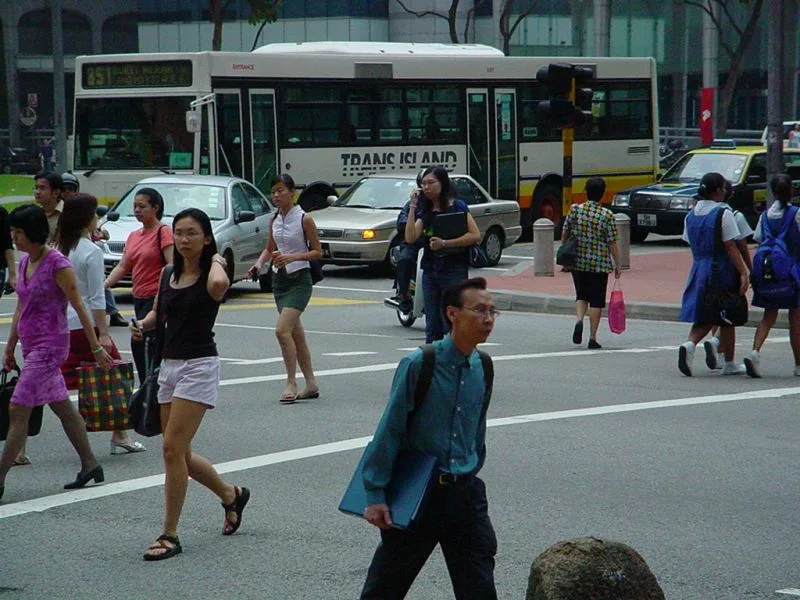
Kim Pong Road is a residential conservation street with minimal commercial service presence. All practical neighbourhood services are on Tiong Bahru Road (5 min east) or at Tiong Bahru Plaza (12 min northeast). The street itself has no ATMs, pharmacies, or medical clinics.
Kim Pong Road’s services are its architecture treat it accordingly. The street offers no commercial services that justify a visit in their own right. It justifies a visit because the 1936 SIT buildings here are among the best-preserved examples of Streamline Moderne tropical housing in Southeast Asia. The spiral staircases, the porthole windows, the curved corner these are the service the street provides. Plan the practical errands on Tiong Bahru Road; plan the architecture walk on Kim Pong Road.
Kim Pong Road’s Connection to Tiong Bahru
Kim Pong Road is the conservation area’s east–west connector the street that links all the parallel north–south conservation streets (Eng Hoon, Yong Siak) into a single walkable circuit. Understanding how Kim Pong Road connects to the rest of the neighbourhood unlocks the complete Tiong Bahru walk.
Eng Hoon Street Curved Corner & Bakery
Perpendicular Street · 2 min south · Cafés & Architecture: The Kim Pong / Eng Hoon curved corner is the conservation area’s most photographed detail · Tiong Bahru Bakery 2 min south at No. 56
Eng Hoon Street crosses Kim Pong Road at a perpendicular junction approximately mid-way along Kim Pong Road’s length. The curved corner building at this junction is the SIT estate’s most architecturally celebrated detail the building wraps the Eng Hoon Street / Kim Pong Road corner in a continuous Streamline Moderne curve. From this junction, Tiong Bahru Bakery and Merci Marcel (both at No. 56 Eng Hoon Street) are 2 minutes south under the five-foot way colonnade. The junction is the natural mid-point of the Kim Pong Road walk where the architecture and the café stop connect.
🚶Distance: The Eng Hoon St junction is mid-way along Kim Pong Road · No. 56 is 2 min south
📸Photography: Stand at the junction and face southwest the curve is best from this angle
Yong Siak Street Coffee, Bookshop & Design
Perpendicular Street · 3 min east · Coffee & Books: Forty Hands at No. 78, Books Actually at No. 9, Strangelets at No. 7 all within 3 min of the Yong Siak / Kim Pong junction
Yong Siak Street intersects Kim Pong Road at the eastern section of Kim Pong Road’s length. From the Kim Pong / Yong Siak junction, Forty Hands (No. 78) is 2 minutes north; Books Actually (No. 9) and Strangelets (No. 7) are 3 minutes south. The junction is the natural eastern end-point of the Kim Pong Road architecture walk, where the residential street transitions into the mixed-use café and retail strip. Walking Kim Pong Road from west (Seng Poh Road) to east (Yong Siak Street junction) and then turning south onto Yong Siak Street is the correct single-circuit route through the conservation area.
🚶From Kim Pong Rd: Turn south at Yong Siak junction → Books Actually (No. 9) in 3 min
🚶Or turn north: Forty Hands (No. 78) in 2 min for coffee after the architecture walk
Seng Poh Road Tiong Bahru Market
3 min west · Hawker Heritage: Kim Pong Road ends at Seng Poh Road near the market the hawker centre start point for the conservation area circuit
Kim Pong Road terminates at Seng Poh Road at its western end a 3-minute walk from the Eng Hoon Street junction. Turning left (south) on Seng Poh Road leads to Tiong Bahru Market (30 Seng Poh Road, another 3 minutes). The market’s hawker centre opens at 6am; Jian Bo Shui Kueh from 6:30am. The most efficient Kim Pong Road circuit begins at the market: market breakfast (6:30–8am) → east on Kim Pong Road (architecture walk, 8–9am) → south at the Eng Hoon Street junction (bakery, 8:30–9:30am) → east to Yong Siak Street (coffee, books, 9:30am–noon) → north to Tiong Bahru Road (Loo’s lunch from 11am).
🚶From western end of Kim Pong Rd: Turn left on Seng Poh Road → market at No. 30 in 3 min
🕐Market: 6am daily · Jian Bo Shui Kueh from 6:30am · Closed Tuesdays
Nearby Attractions
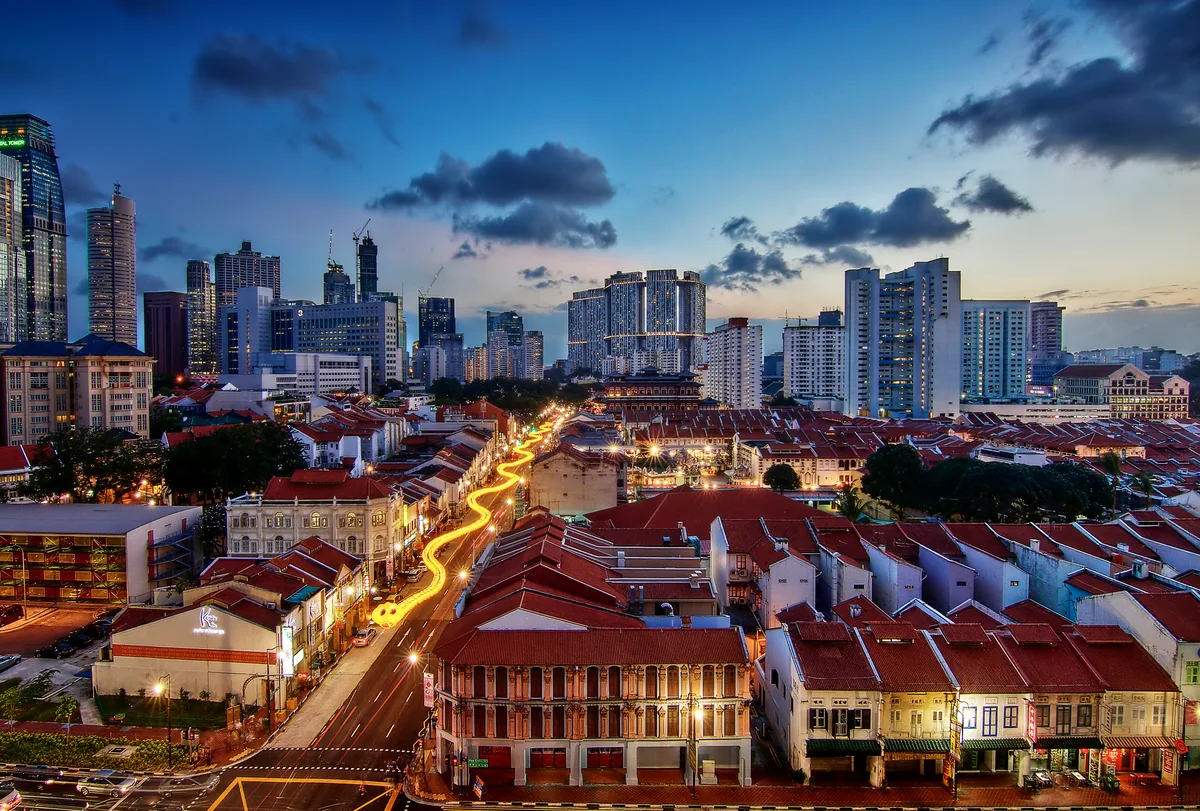
Kim Pong Road is within the Tiong Bahru conservation area and sits within walking distance of every significant estate attraction.
Getting to Kim Pong Road
Tiong Bahru MRT EW17
MRT · East-West Line · EW17
Exit A → south on Tiong Bahru Road → left on Kim Pong Road · 10 minutes total: Tiong Bahru MRT (EW17) is the natural arrival point for Kim Pong Road. Exit A emerges onto Tiong Bahru Road. From Exit A: walk south (right) on Tiong Bahru Road for approximately 5 minutes, then turn right (west) onto Kim Pong Road. The eastern end of Kim Pong Road is where the conservation area’s residential blocks begin the architecture is immediately visible from the junction. Total from exit gate to Kim Pong Road: approximately 10 minutes.
Alternative approach via Seng Poh Road (recommended if doing the market first): Exit A → south on Tiong Bahru Road → left on Seng Poh Road → walk past the market → turn right onto Kim Pong Road at the western end. This puts you at the market end of Kim Pong Road, allowing the architecture walk to proceed east toward the Eng Hoon Street curve and the Yong Siak Street junction. Total including market stop: 12–15 minutes from MRT.
Journey times: Raffles Place (EW14) 3 stops, ~8 min. Tanjong Pagar (EW15) 1 stop, 3 min. City Hall (EW13) 4 stops, 10 min.
Use SimplyGo tap with any contactless Visa or Mastercard. No EZ-Link card needed. Fare from Raffles Place: approximately $1.40. Exit A for Tiong Bahru Road and the conservation area. On weekend mornings the MRT is always the correct choice parking near the conservation area fills before 8:30am on Saturdays and Sundays.
Buses to Kim Pong Road
Kim Pong Road has no bus stop on the street itself. The nearest bus stops are on Tiong Bahru Road (eastern end of Kim Pong Road, 5 min walk) and Seng Poh Road (western end, 3 min walk). Services on Tiong Bahru Road: Bus 123, 175, 33. From Tanjong Pagar interchange: Bus 121 or 122. Alight at the Tiong Bahru Road stop near the MRT and walk south then west onto Kim Pong Road 10 minutes from the bus stop.
Parking Near Kim Pong Road
There is no on-street parking on Kim Pong Road. The narrow conservation lane runs single-file and the roadside is committed to the five-foot way setback. The HDB carparks on Kim Tian Road and Tiong Bahru Road are the practical options the Kim Tian Road carparks are the closest to the street.
Kim Tian Road HDB carparks are the best parking option near Kim Pong Road 3 minutes walk, $0.60 per 30 minutes, and they remain available later on weekend mornings than the Tiong Bahru Road carparks because fewer visitors know they exist. From Tiong Bahru MRT, walk south on Tiong Bahru Road and turn left onto Kim Tian Road; the carpark entrance is approximately 200m along on the right. As always on weekend mornings before 10am: the MRT from Raffles Place is 8 minutes and $1.40, faster and cheaper than any parking scenario in the conservation area.
Walking Route The Full Kim Pong Road Architecture Circuit
The Kim Pong Road architecture circuit from the market to the spiral staircases to the curved corner to the cafés takes 3–4 hours at a deliberate pace. This route is designed to cover the street’s architectural highlights in sequence without missing the key details.
Things To Do on Kim Pong Road
Frequently Asked Questions
Brandon’s Verdict
Kim Pong Road is the conservation area’s best-kept secret, and it should stay that way
I grew up near here and I have been walking Kim Pong Road since before anyone called it an Art Deco street. The spiral staircases were not a tourist attraction when I was a child they were the stairs residents walked to get to their apartments. The porthole windows were not Streamline Moderne vocabulary they were the windows at the landing where you turned the corner going up. The curved corner at Eng Hoon Street was not a photography destination it was where you turned left to get to the market.
What I find valuable about Kim Pong Road now is that it is still recognisably that. The ground-floor commercial activity on Eng Hoon Street and Yong Siak Street has transformed those streets into café destinations; Kim Pong Road, because it is primarily residential with fewer café tenants, retains the 1936 character more completely. The architecture is visible here without the weekend visitor crowd and the café queue competing for your attention. The spiral staircase wells are quieter. The light on the rendered plaster at 8am is the same light that fell on these buildings the year they were completed. Walk this street before 9am, find three spiral staircases, read the porthole windows, stand at the curved corner. That is the specific Tiong Bahru that the architects built for not for cafés and kouign-amann, but for the daily life of working-class Singapore in 1936. The kouign-amann is 2 minutes south and it is excellent. The architecture came first.