
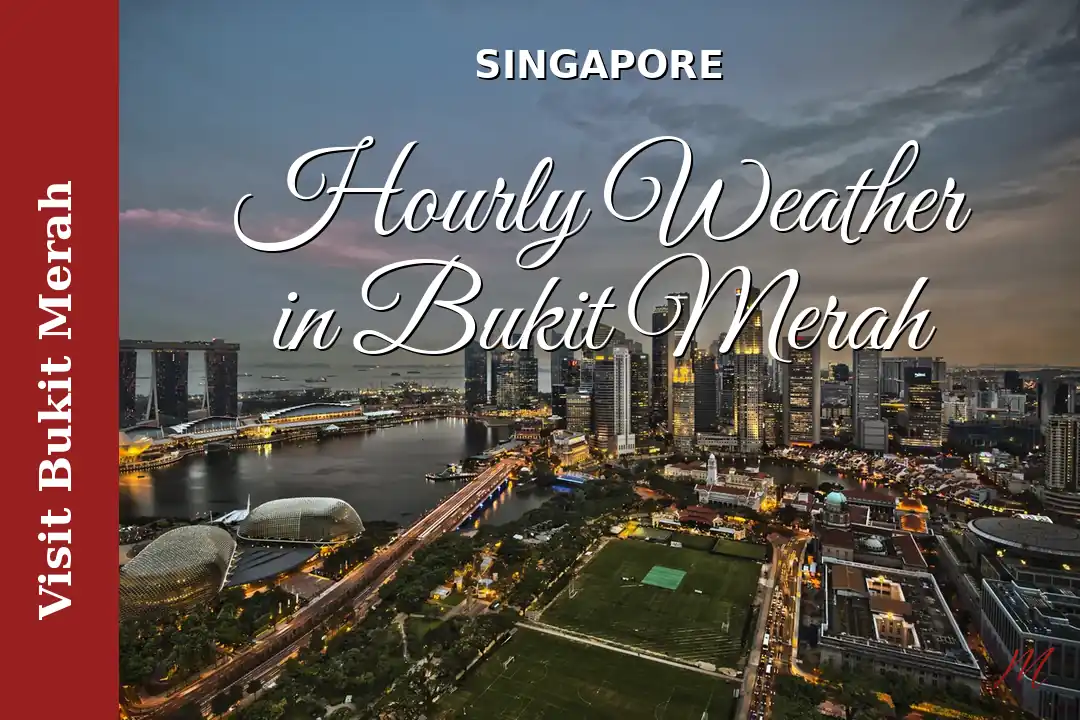
Bukit Merah Hourly Weather Forecast | Today & Tomorrow
Bukit Merah sits in Singapore’s tropical rainforest climate zone warm, humid, and largely consistent all year, with rainfall (not temperature) doing most of the seasonal work. Below is the live current weather for Bukit Merah, followed by the hourly and 7-day forecast, a full monthly climate breakdown, and honest advice on the best time to visit based on the weather rather than the calendar.
Current Weather, Hourly & 7-Day Forecast
This widget pulls live data for Bukit Merah, Singapore from Open-Meteo current conditions, the next 12 hours, and a full week ahead, refreshed automatically without you needing to touch anything.
Bukit Merah Climate at a Glance
Like the rest of Singapore, Bukit Merah has an equatorial climate technically a tropical rainforest climate (Köppen “Af”) with no true dry season, consistently high humidity, and small day-to-day temperature swings. What actually varies through the year isn’t temperature so much as rainfall, driven by the Northeast Monsoon (roughly December to early March) and the Southwest Monsoon (roughly June to September), with two shorter inter-monsoon periods bringing the most unpredictable afternoon thunderstorms.
For visitors planning a trip around Bukit Merah’s hawker centres, the Jalan Bukit Merah food corridor, Alexandra Village Food Centre, and the open-air market areas, this matters more than it sounds: the difference between a good weather day and a bad one is rarely about temperature it’s about whether the afternoon shower arrives while you’re walking between stops or safely tucked into a hawker stall with a plate of satay or wonton noodles.
| Climate Feature | Typical Value |
|---|---|
| Average high | 31–32°C (88–90°F) |
| Average low | 24–25°C (75–77°F) |
| Average humidity | 75%–85% |
| Annual rainfall | ~2,150 mm, spread across the year |
| Wettest months | November, December, January |
| Driest months | February, March, July |
| UV index | Very high (8–11) almost every day |
Monthly Weather Breakdown
Singapore’s temperature barely moves through the year the real planning question is rainfall and humidity. Here’s how each month typically plays out in Bukit Merah.
| Month | Avg High / Low | Rain Days | What to Expect |
|---|---|---|---|
| January | 30°C / 24°C | ~15 | Northeast Monsoon tail end; breezier, occasional multi-day rain spells |
| February | 31°C / 24°C | ~9 | One of the driest, sunniest months; great for hawker hopping and outdoor walks |
| March | 32°C / 25°C | ~12 | Warm and mostly dry; good for exploring Jalan Bukit Merah on foot |
| April | 32°C / 25°C | ~14 | Hot, humid, inter-monsoon thunderstorms build most afternoons |
| May | 32°C / 25°C | ~15 | One of the hottest months; short intense downpours are common |
| June | 32°C / 25°C | ~13 | Southwest Monsoon begins; occasional regional haze possible |
| July | 31°C / 25°C | ~12 | Drier stretch within the monsoon; good for outdoor hawker plans |
| August | 31°C / 25°C | ~14 | Warm with regular late-afternoon showers |
| September | 31°C / 24°C | ~14 | Transition month; increasingly unpredictable showers |
| October | 31°C / 24°C | ~16 | Inter-monsoon thunderstorms, sometimes heavy and sudden |
| November | 30°C / 24°C | ~19 | Wettest run-up begins; pack a proper umbrella for hawker visits |
| December | 30°C / 23°C | ~19 | Wettest month of the year; cooler evenings make outdoor dining pleasant when dry |
Best Time to Visit Bukit Merah
Best months: February, March, and July stand out as the most reliable combination of lower rainfall and manageable heat, making them the best time to visit Bukit Merah if outdoor exploring, hawker hopping along Jalan Bukit Merah, or evening visits to Alexandra Village Food Centre are the priority.
Best time of day, any month: Mornings before 11am and evenings after 6pm are consistently more comfortable than the early afternoon, when both heat and thunderstorm risk peak. This lines up well with Bukit Merah’s own rhythm the hawker centres are freshest and less crowded in the morning, and the neighbourhood comes alive again after 6pm when the heat drops and the supper crowd arrives.
Brandon’s tip: I plan outdoor stretches market visits, hawker crawls, photo spots for before noon or after 4pm. Between 12pm and 3pm I stay near a hawker centre or sheltered area (KEK Seafood Restaurant, Alexandra Village Food Centre, Bukit Merah View Market) that’s when the heat and the chance of a downpour both peak.
Rain in Bukit Merah: What to Expect
Rain in Singapore rarely means a wash-out day. Most Bukit Merah showers are short, heavy, and localized typically 20 to 45 minutes of intense rain followed by clear skies again. The pattern that catches visitors off guard is timing: showers are far more likely between 2pm and 6pm than in the morning, especially during the inter-monsoon months of April–May and October–November.
During the Northeast Monsoon (December–January), rain can also arrive as longer, steadier spells rather than a single afternoon burst, sometimes lasting several hours. This is the stretch where a proper umbrella rather than a pocket one earns its keep, especially if you’re planning to move between multiple hawker centres or the Bukit Merah Bus Interchange area on foot.
What to Pack & Weather Tips for Hawker Dining
- Lightweight, breathable clothing cotton or moisture-wicking fabrics handle humidity best
- A compact umbrella or light rain jacket, regardless of season
- Comfortable, quick-drying walking shoes
- Sunscreen and a hat the UV index is high nearly every day
- A reusable water bottle humidity makes dehydration easy to miss
- Most Bukit Merah hawker centres are sheltered and covered so rain rarely stops a meal midway
- Evenings are noticeably more comfortable once the sun drops toward the mid-to-high 20s°C
- If heavy rain is forecast, Alexandra Village Food Centre and KEK Seafood are fully covered and easy to reach by bus
- The Bukit Merah Bus Interchange is sheltered connecting hawker hops in wet weather is straightforward
Frequently Asked Questions
Brandon’s Verdict
Pack for humidity, not for rain and check the live widget before you head out.
Bukit Merah’s weather is remarkably consistent hot and humid, with a shower most afternoons somewhere in the calendar. Don’t over-plan around forecasts more than a day or two out; instead, dress light, carry a small umbrella out of habit, and build a little shelter (a hawker centre, the bus interchange, a covered walkway) into any afternoon plan. If you want the calmest weather window for walking tours and outdoor visits, aim for February to March or July. Otherwise, Bukit Merah works in any weather its hawker centres and covered corridors are part of what makes it so practical to explore year-round.